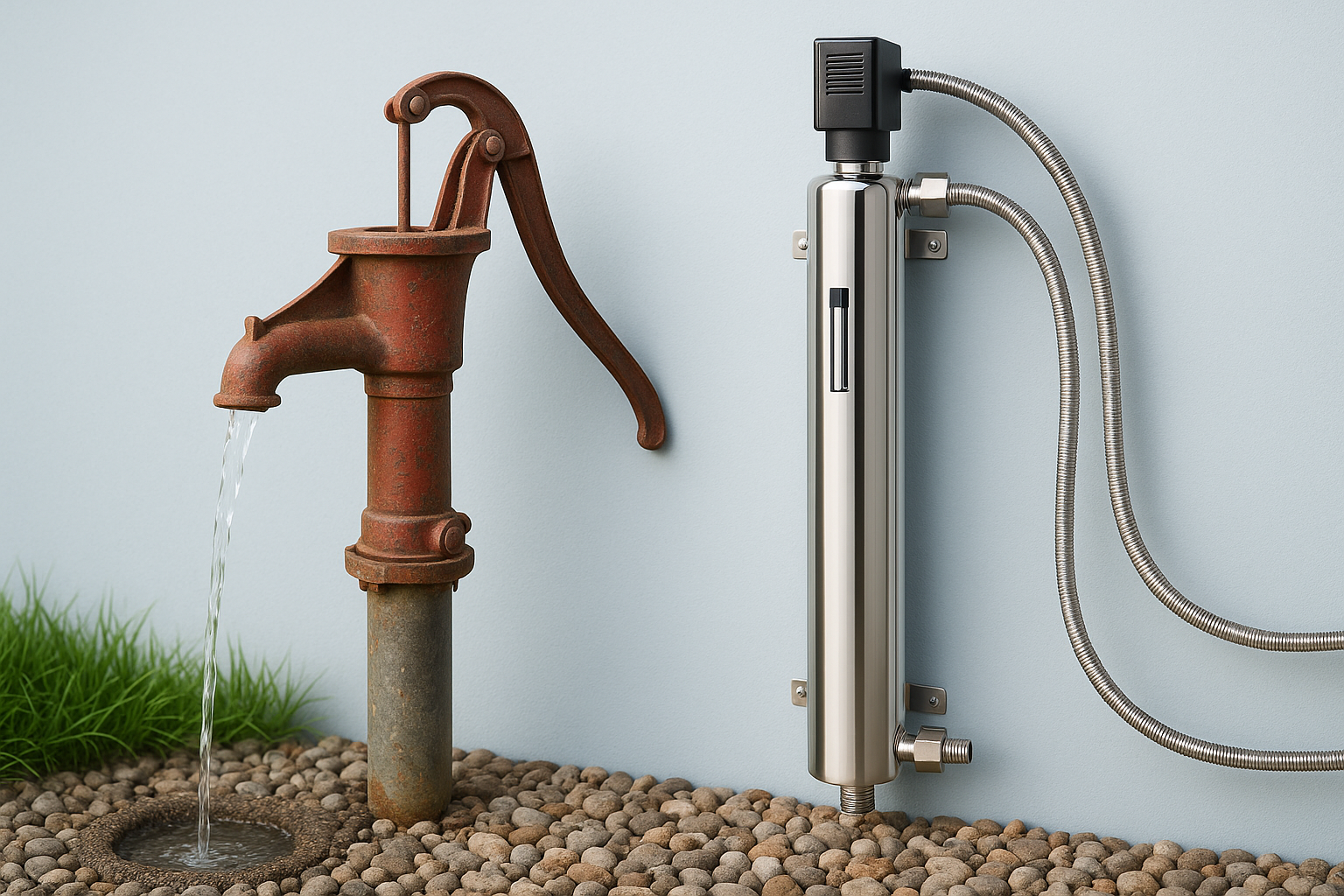
Why UV Filtration Matters for Well Water
If your home relies on a private well, you’re responsible for the safety of the water that comes into your taps. Unlike municipal supplies, well water isn’t routinely treated, so bacteria, viruses, and other microorganisms can make their way into your system. UV filtration provides a reliable, chemical-free way to disinfect well water and give you peace of mind.
What Is UV Filtration?
How UV Disinfection Works
Ultraviolet (UV) filtration uses UV-C light to inactivate microorganisms. The UV-C wavelength damages their DNA or RNA, preventing bacteria, viruses, and protozoa from reproducing and causing infection. It doesn’t remove particles or chemicals; it simply neutralizes biological contaminants as water passes through a UV chamber.
Why It’s Particularly Good for Well Water
Well water can be vulnerable to contamination from surface runoff, septic systems, and wildlife. UV systems are effective against microbial threats commonly found in wells—like E. coli, Giardia, and Cryptosporidium—making them an excellent line of defense for private water supplies.
Benefits of UV Filtration for Well Water
- Chemical-free treatment: UV doesn’t add chlorine or other chemicals, preserving water taste and avoiding byproducts.
- Fast and continuous: Disinfection occurs instantly as water flows through the unit—no contact tanks needed.
- Low maintenance: Aside from periodic lamp replacement and cleaning, UV systems are simple to care for.
- Effective against a broad range of pathogens: Viruses, bacteria, and many protozoa are inactivated by properly sized UV systems.
Limitations & Pre-treatment Needs
When Sediment or Cloudiness Matters
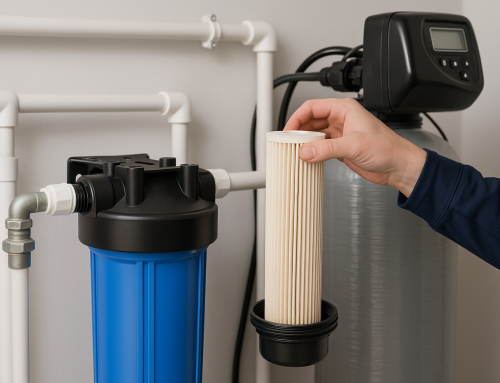
UV light must reach microorganisms to inactivate them. If water is cloudy, colored, or contains high levels of sediment, the effectiveness of the UV system can be reduced. That’s why pre-filtration—typically a sediment filter or carbon filter—is often required to remove particles and turbidity before the UV chamber.
Chemicals and Minerals Aren’t Removed
UV does not remove dissolved chemicals, heavy metals, or hardness minerals. If your well water has nitrate, iron, lead, or other contaminant issues, a comprehensive treatment plan combining filtration methods is necessary.
Installation and Maintenance
Professional Installation Considerations
A properly installed UV system requires correct sizing based on flow rate and water quality. The unit should be placed after any necessary pre-filters and before storage tanks or point-of-use outlets you want protected. Electrical hookup and placement for easy maintenance are additional factors a professional should handle.
Routine Care and Lamp Replacement
UV lamps typically need replacement every 9–12 months, even if they still light, because their germicidal output declines over time. Quartz sleeves should be cleaned periodically to remove scale or buildup. Many systems have indicator lights or alarms to remind you when maintenance is needed.
Choosing the Right UV System
Flow Rate and Sizing
Match the UV system to your household flow rate and peak water use. Undersized systems may not provide adequate exposure time for disinfection, so sizing is one of the most important decisions. A water pro will calculate flow and recommend an appropriate UV chamber.
Certifications and Quality Markers
Look for systems tested to appropriate standards (such as NSF/ANSI where applicable) and reputable manufacturers. Warranties, easy access to replacement lamps and sleeves, and local service support are practical factors to consider.
Cost and Return on Investment
Initial costs for a whole-house UV system vary depending on capacity and features, and you’ll have ongoing lamp and maintenance expenses. Compared to the health benefits, avoiding illness and protecting plumbing and appliances often makes UV filtration a cost-effective choice. Combining UV with targeted pre-treatment can deliver the best overall value.
Testing Your Well Water & When to Act
Regular testing (at least annually, or more often if you notice changes) is key to deciding if UV treatment is right for your well. Test for bacteria (total coliforms and E. coli), turbidity, and any local contaminants of concern. If tests show microbial contamination or if you’re upgrading your system, schedule a professional assessment to design the correct treatment train.
Conclusion
UV filtration is an effective, chemical-free method to disinfect well water and protect your household from microbial contamination. It works best as part of a tailored treatment plan that addresses sediment and chemical issues first. For trusted guidance, professional sizing, and installation, reach out to Custom Filtration Systems to schedule an appointment and ensure your well water is safe and reliable.