Understanding Well Water Filtration Systems
If your home draws water from a private well, the quality of that water depends entirely on the local geology, nearby land use, and how the well is maintained. A proper well water filtration system not only improves taste and clarity, it protects your plumbing, appliances, and, most importantly, your family’s health.
Why Well Water Needs Filtration
Unlike municipal water supplies, well water isn’t treated by your city. That means contaminants can enter your water from natural sources (like minerals and decaying organic matter), agricultural runoff, septic systems, and even local industry. Regular testing and the right filtration system can remove or reduce those risks.
Common Well Water Contaminants
- Bacteria and pathogens: Coliform bacteria or E. coli can indicate contamination and pose health risks.
- Iron and manganese: Cause staining, metallic taste, and clogged plumbing.
- Hardness minerals (calcium and magnesium): Lead to scale buildup in pipes and appliances.
- Volatile organic compounds (VOCs) and pesticides: From agricultural or industrial runoff.
- Sediment: Sand, silt, and rust that give water a cloudy appearance and wear on fixtures.
Types of Well Water Filtration Systems
Choosing the correct filtration approach depends on which contaminants you need to address. Below are the most common options:
Sediment Filters
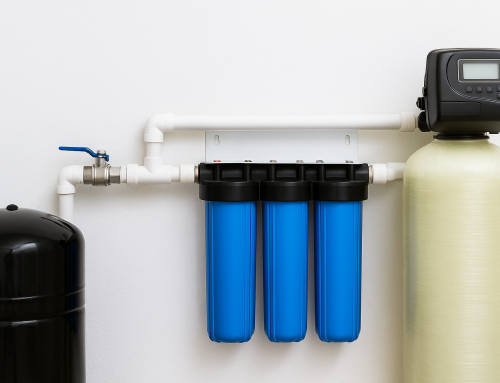
Sediment filters trap sand, silt, and rust particles. They’re typically the first stage in a treatment train to protect finer filters and household equipment from premature clogging.
Activated Carbon Filters
Carbon filters reduce chlorine (if present), pesticides, herbicides, and some VOCs. They also improve taste and odor. There are granular activated carbon (GAC) and carbon block options depending on flow requirements and contaminant levels.
Water Softeners
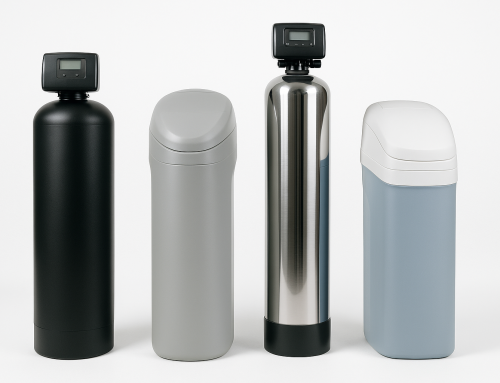
Water softeners use ion exchange to remove hardness minerals (calcium and magnesium). They protect appliances and plumbing, reduce soap scum, and can improve the effectiveness of other filtration stages.
Oxidation and Filtration for Iron/Manganese
Iron and manganese often require oxidation (using air, chlorine, or potassium permanganate) followed by filtration to remove the oxidized particles. Specialty filters like greensand or catalytic carbon may be used for persistent problems.
Reverse Osmosis (RO)
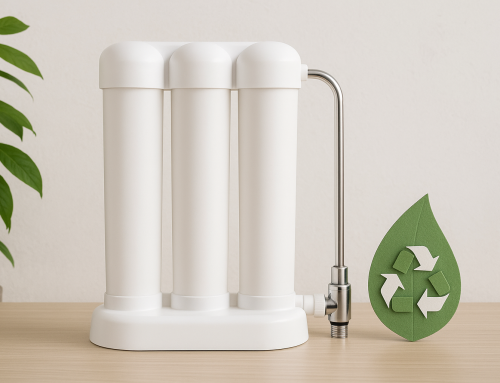
RO systems provide high-level purification for point-of-use applications like kitchen sinks. They remove dissolved solids, many heavy metals, nitrates, and some VOCs. Because they produce wastewater, they’re best used for drinking and cooking water rather than whole-house treatment.
UV Disinfection
Ultraviolet (UV) systems inactivate bacteria, viruses, and protozoa without chemicals. UV is often paired with other filters to ensure water is physically clear before irradiation.
How to Choose the Right System
Follow these steps to pick the right filtration for your well:
- Test your water: Begin with a comprehensive water test from a certified lab. Test for bacteria, nitrates, pH, hardness, iron, manganese, and any region-specific contaminants.
- Prioritize contaminants: Identify which contaminants pose health risks vs. aesthetic issues (taste, smell, staining).
- Match technologies to problems: For example, install UV for bacteria, RO for dissolved solids, and carbon for VOCs and taste/odor issues.
- Consider flow rate and household demand: Whole-house systems must handle peak usage without reducing water pressure.
- Plan maintenance: Know filter replacement intervals, salt cycles for softeners, and annual checks for UV systems.
Installation and Maintenance
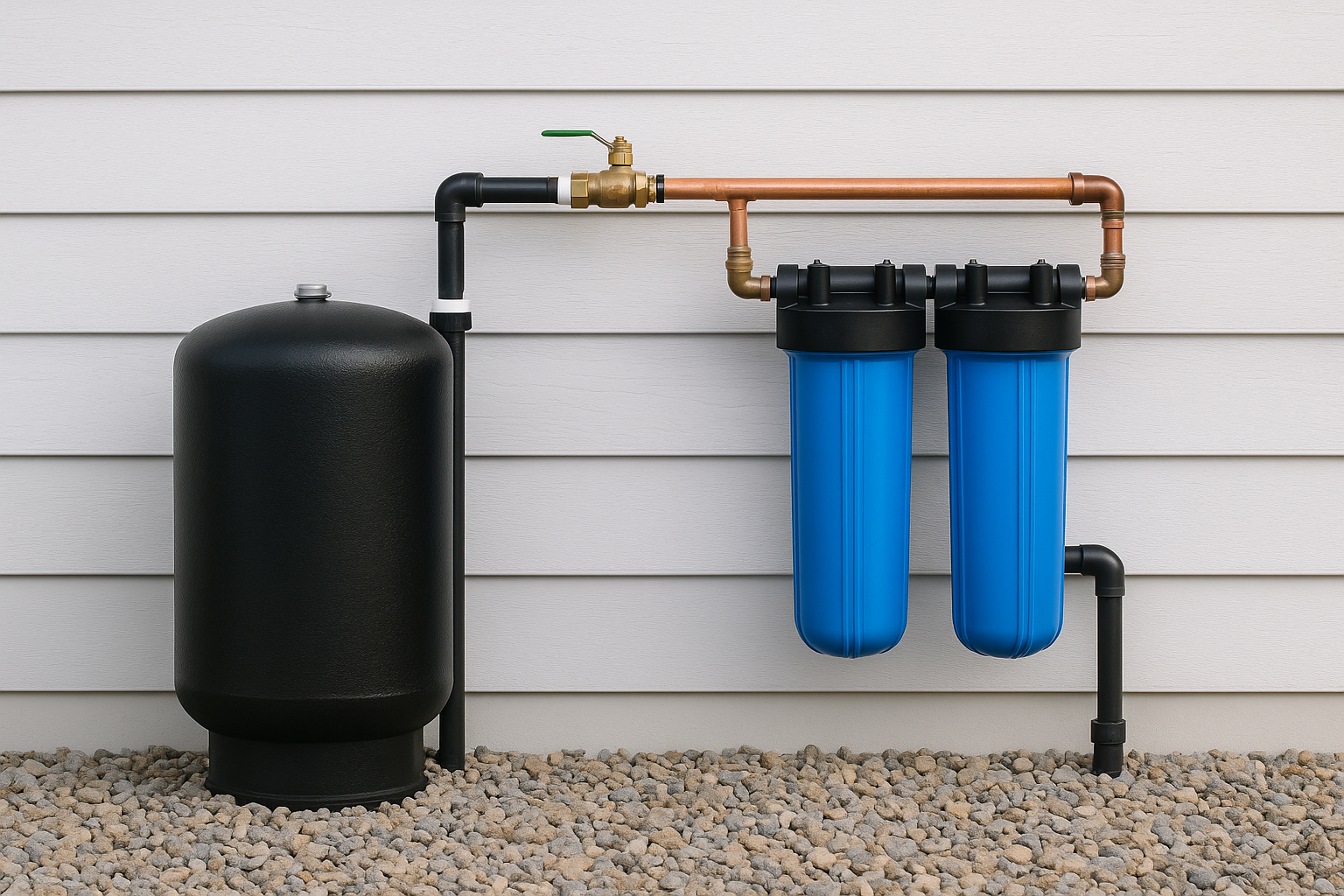
Professional installation is strongly recommended for whole-house systems and multi-stage setups. A qualified technician will size the system, ensure correct connections, and set up backwashing or regeneration cycles if needed.
Typical maintenance tasks include replacing cartridge filters, replenishing softener salt, cleaning sediment traps, and scheduling annual water tests. Routine upkeep ensures long system life and consistent water quality.
Costs and Long-Term Benefits
Initial costs vary widely: a basic sediment and carbon whole-house system might be a few hundred to a few thousand dollars, while comprehensive multi-stage systems or whole-home RO setups cost more. Consider these benefits:
- Improved health and peace of mind from removing harmful contaminants.
- Longer appliance life and fewer plumbing repairs due to reduced scale and sediment.
- Better-tasting water, eliminating the need for bottled water and reducing plastic waste.
Over time, lower maintenance and replacement costs for appliances can offset initial filtration investment.
Getting Professional Help
Because well water quality varies so much, professional guidance can save time and money. For a tailored solution and reliable installation, reach out to Custom Filtration Systems to schedule an appointment. Their experts can test your water, recommend the best system, and handle installation and maintenance so you can enjoy clean, safe water at home.
Conclusion
Well water filtration protects your family, appliances, and home by addressing both health-related and aesthetic concerns. Start with a complete water test, choose technologies matched to your contaminants, and partner with a trusted company like Custom Filtration Systems for professional sizing and service. With the right system and maintenance, you can feel confident in the quality of your well water for years to come.