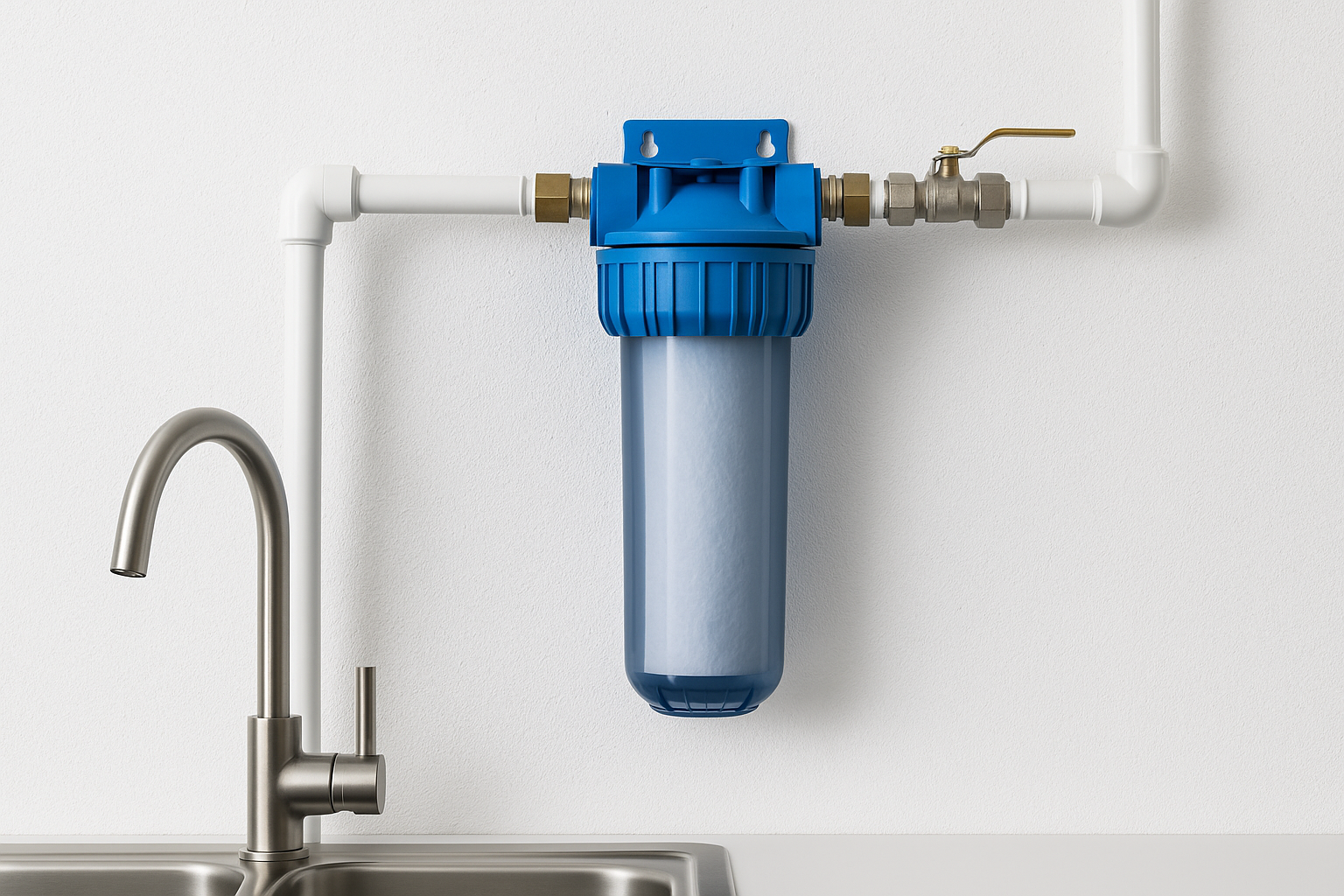
Understanding Whole House Sediment Water Filters
Whole house sediment water filters are the first line of defense against visible and invisible particles that enter your plumbing system — things like sand, silt, rust, and other debris. Installed at the point where water enters your home, these filters protect pipes, water heaters, washing machines, and fixtures while improving the appearance and performance of your water.
Why Sediment Filters Matter
While sediment itself isn’t typically harmful to health, it causes a range of everyday problems: clogged faucets and showerheads, reduced appliance lifespan, scratchy laundry, and poor-tasting or cloudy water. A dedicated sediment filter reduces these issues and can be a cost-effective step before adding carbon filters or softeners.
Key Benefits
- Protects plumbing and appliances from abrasion and clogging
- Improves water clarity and reduces cloudiness
- Extends life of downstream filters and water-using equipment
- Reduces maintenance and service calls
Types of Whole House Sediment Filters
There are several common designs, each suited to different needs and budgets.
Spin-Down Filters
Spin-down (or centrifugal) filters remove larger particles using a clear canister and a spinning action that forces sediment to the bottom. They’re easy to flush and great as a pre-filter for well water with heavy particulate load.
Cartridge Filters
Cartridge systems use replaceable pleated or spun polypropylene cartridges with specific micron ratings. They’re available in 1–100+ micron sizes and are ideal for finer filtration when you need to capture small particles like rust and silt.
Backwashing Filters
Backwashing sediment filters periodically reverse flow to clean themselves. They are lower-maintenance and work well for homes with variable sediment loads, but they require more space and a drain for waste water.
How to Choose the Right Filter
Choosing a sediment filter isn’t one-size-fits-all. Consider these factors to find the right system for your home:
Micron Rating
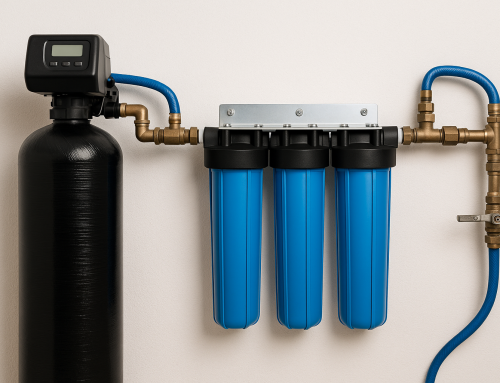
Micron rating measures particle size the filter captures. Coarse filters (50–100 microns) remove sand and gravel; medium (10–50 microns) handle silt and rust; fine filters (1–10 microns) remove very small particles. A common strategy is using a pre-filter with a coarse micron rating followed by a finer cartridge downstream.
Flow Rate and Household Demand
Make sure the filter supports your home’s peak flow (gallons per minute). Too small a filter will cause pressure drops and poor performance during simultaneous water use.
Maintenance and Operating Cost
Factor in replacement cartridge costs, frequency of backwashing, and whether you have the time for routine flushing. Pleated cartridges often last longer than spun ones and can be rinsed multiple times.
Source Water
Well water frequently contains more particulate than municipal supplies. If you have well water, prioritize durability and larger-capacity systems like spin-downs or backwashing filters.
Installation and Maintenance
Professional installation ensures proper sizing, placement, and integration with any existing water treatment. A quality install reduces leaks and ensures warranty coverage. Regular maintenance includes replacing cartridges, flushing spin-down housings, and watching for pressure drops that indicate a clogged filter.
DIY vs. Professional
Simple cartridge swaps and spin-down flushes can be DIY, but initial installation, sizing, and plumbing changes are best handled by a qualified technician—especially if you’re combining systems or working with well water.
Common Problems and Troubleshooting
Even the best filters need attention. Watch for these signs:
- Sudden pressure drop: likely a clogged cartridge or a filter too small for demand.
- Frequent clogging: consider pre-filtration or a larger-capacity filter.
- Leaks: check seals, housings, and installation fittings.
Cost and Return on Investment
Initial costs vary from under $200 for simple housings and cartridges to several thousand dollars for high-capacity backwashing systems. Consider ROI in terms of fewer repairs, longer appliance life, reduced plumber visits, and improved water quality. Over time, a well-chosen sediment filter can pay for itself.
Frequently Asked Questions
Do sediment filters remove bacteria or chemicals?
No—sediment filters remove particulates but not dissolved chemicals or microorganisms. Combine them with carbon filters or UV systems for broader protection.
How often should I replace the cartridge?
Replacement depends on water quality and usage. Check cartridges every 3–12 months; pleated cartridges often last longer than spun versions.
Conclusion
Whole house sediment water filters are a smart, practical investment for protecting your plumbing, improving water clarity, and extending the life of appliances. Choosing the right type and maintaining it regularly keeps your home running smoothly. Ready to find the best solution for your water? Reach out to Custom Filtration Systems to schedule an appointment and get a personalized recommendation.