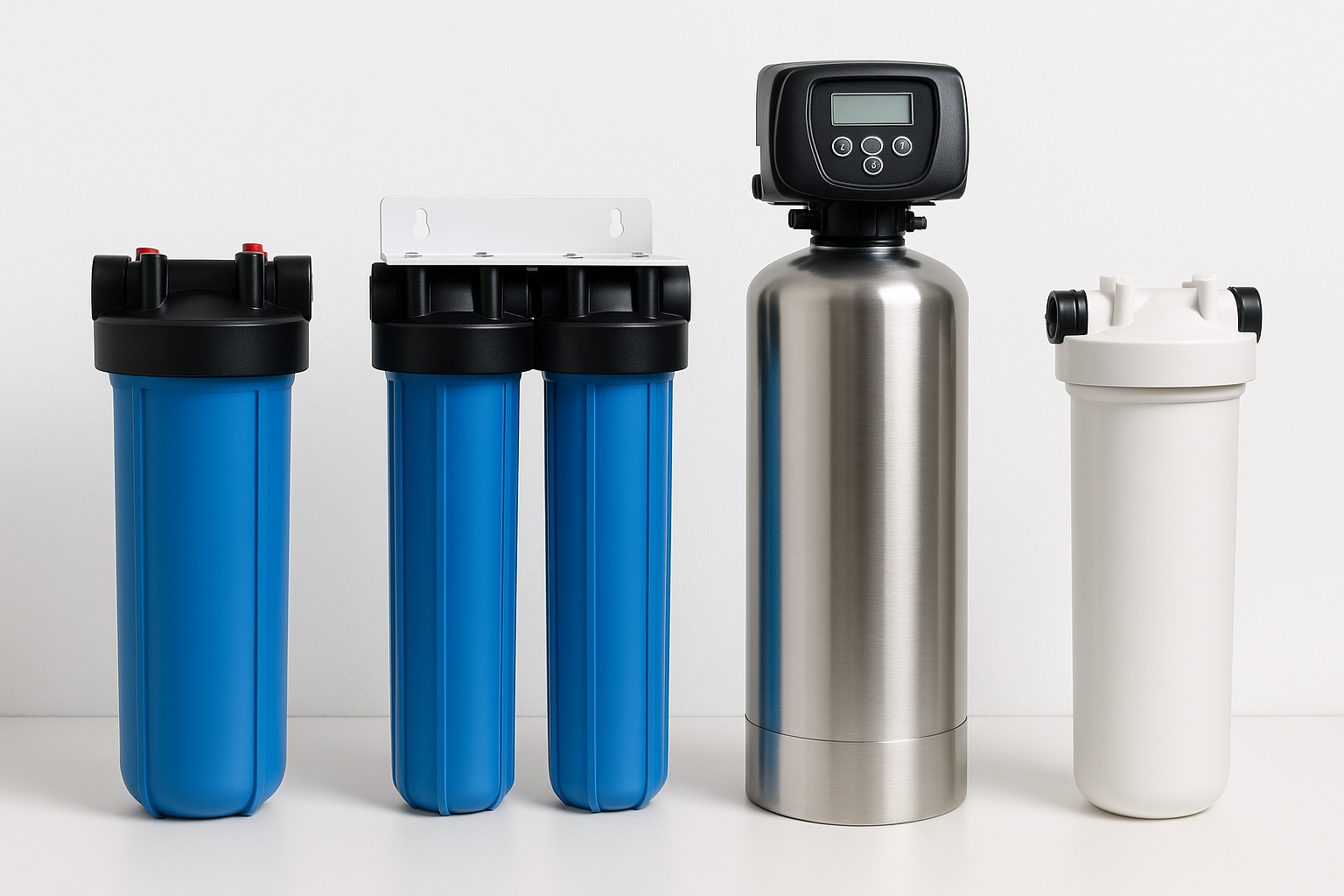
Why Whole House Water Filters?
Whole house water filters treat water at the point it enters your home, protecting every tap, shower, and appliance. Unlike point-of-use filters under a sink, whole house systems provide consistent protection, reduce scale and sediment, and improve water taste and odor for your entire household. Choosing the right system depends on what contaminants you need to remove, your flow needs, and maintenance preferences.
Types of Whole House Water Filters
1. Activated Carbon Filters
Activated carbon is one of the most common whole house options. It excels at removing chlorine, volatile organic compounds (VOCs), and improving taste and odor. Carbon filters come as granular activated carbon (GAC) or carbon block cartridges.
Pros: Effective for chlorine and organics, relatively low cost, easy to replace cartridges. Cons: Limited removal of minerals, heavy metals, or microorganisms unless combined with other media.
2. Reverse Osmosis (RO) Systems
Whole house RO systems can provide very high contaminant reduction, including dissolved salts and many heavy metals. However, whole-house RO is less common due to cost, large footprint, and significant water waste compared to point-of-use RO under a sink.
Pros: Excellent contaminant removal. Cons: High initial cost, maintenance, lowered water pressure without booster, and higher water waste.
3. Water Softeners (Ion Exchange)
Softening systems remove hardness minerals (calcium and magnesium) using salt-based ion exchange or newer salt-free technologies. They protect plumbing and appliances from scale and can improve soap performance.
Pros: Extends appliance life, reduces scale. Cons: Salt-based systems don’t remove chemical contaminants or microbes and add sodium to treated water.
4. UV Disinfection
Ultraviolet systems inactivate bacteria, viruses, and protozoa without chemicals. UV is often paired with filtration to remove particulates first, since particles can shield microbes from UV light.
Pros: Chemical-free pathogen control. Cons: No removal of chemical contaminants or particulates; requires power and pre-filtration.
5. KDF and Media Blends
KDF (copper-zinc alloy) media reduce chlorine and certain heavy metals, and limit microbial growth in carbon filters. Multimedia systems mix sand, anthracite, and garnet to capture sediment and larger particulates.
Pros: Versatile and durable when combined properly. Cons: Performance depends on correct media selection and flow rates.
Key Factors to Compare
Contaminant Removal
Start with a water test to identify hardness, chlorine, lead, iron, nitrates, VOCs, or microbial risks. Match the system to the contaminants: carbon for chlorine/VOCs, softeners for hardness, RO for dissolved solids, UV for microbes.
Flow Rate and Water Pressure
Whole house systems must support peak household demand. Check the gallons per minute (GPM) rating. Undersized systems cause low pressure and frustrated showers; oversized systems increase cost unnecessarily.
Maintenance and Operating Cost
Factor in replacement filters, media, salt (for softeners), lamp replacements (for UV), and professional servicing. Carbon cartridges and sediment filters are low-cost but need periodic replacement. RO and softeners have higher ongoing costs.
Lifespan and Warranty
Durability varies by build quality and media. Look for systems with clear warranty terms and accessible parts. Certified components (NSF/ANSI standards) give better assurance of performance.
How to Choose the Right System for Your Home
1. Test Your Water First
A professional lab or reliable home test identifies priorities. You may discover you need a combination system—sediment pre-filter, carbon for chemicals, and UV for microbial safety, for example.
2. Balance Budget and Needs
Set a practical budget that includes installation and long-term maintenance. Systems like basic carbon + sediment filters are budget-friendly and solve many common issues. More comprehensive setups (RO + UV + softener) address broader problems but cost more.
3. Professional Installation vs. DIY
Professional installation ensures correct sizing, placement, and code compliance—especially for complex systems or irrigation ties. A reputable installer can also recommend system combinations tailored to your water profile.
Top Considerations and Common Combinations
Many homeowners find the best balance by combining technologies: sediment pre-filtration → activated carbon → UV (for microbial risk), and a separate softener if hardness is high. This layered approach protects plumbing, improves taste, and ensures safety.
Conclusion
Comparing whole house water filters comes down to knowing your water, matching technology to contaminants, and balancing upfront cost with ongoing maintenance. For most homes, a combination of sediment and activated carbon with targeted add-ons (softener, UV, or RO where needed) gives reliable, whole-house protection. To get a tailored recommendation and professional installation, reach out to Custom Filtration Systems to schedule an appointment and start with a water test.