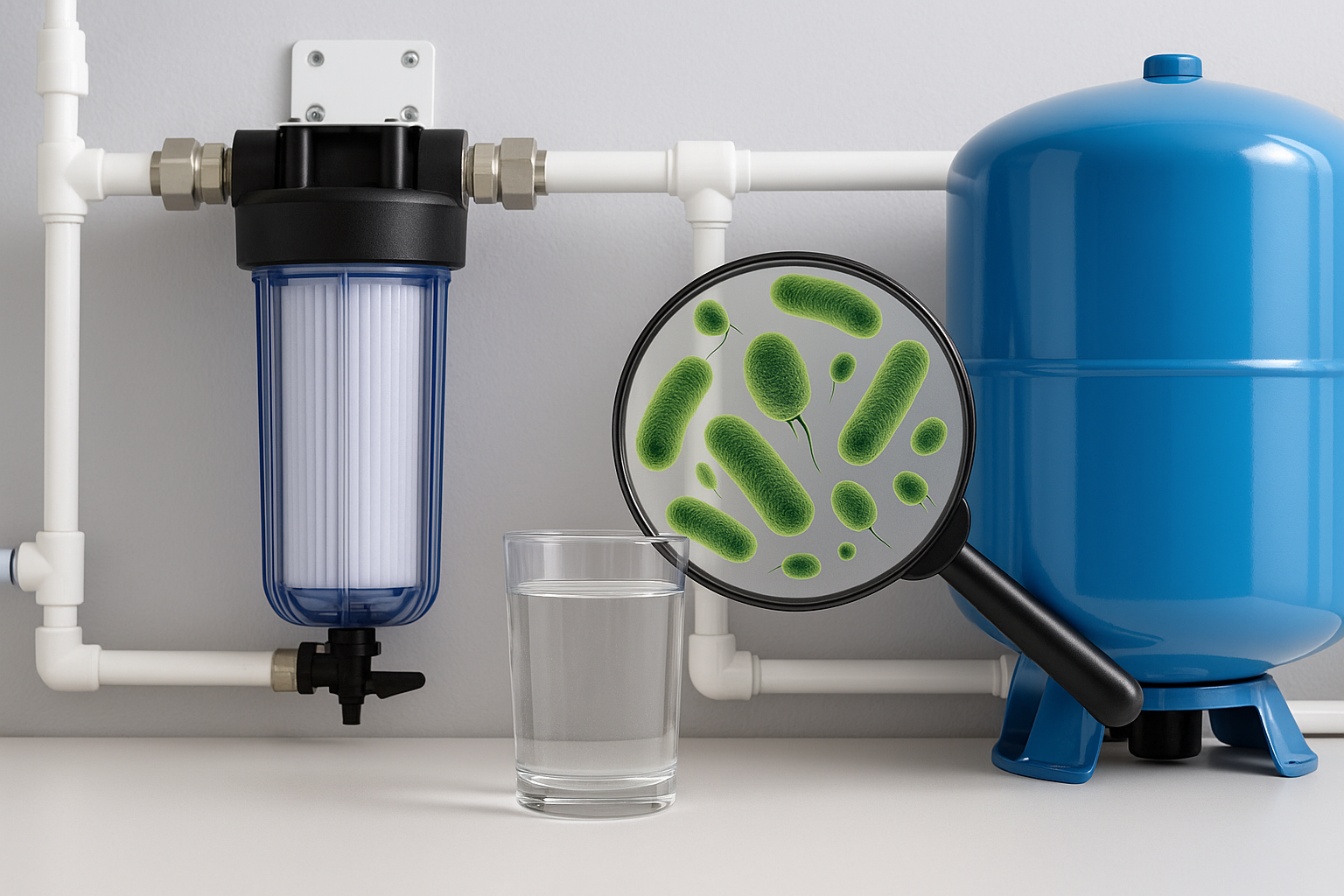
Why Bacteria in Well Water Matter
If your home relies on a private well, you control a critical part of your water source and its safety. Unlike municipal supplies, well water isn’t treated by a public utility, which makes testing and treating your water your responsibility. Bacteria like E. coli and coliform can indicate contamination from surface runoff, septic systems, or animal activity. Exposure can cause gastrointestinal illness and other health problems, so addressing bacterial contamination promptly is essential for protecting your family.
Common Bacteria Found in Well Water
Understanding what might be in your well helps you choose the right solution. The most common bacterial contaminants include:
- Total coliform bacteria: A broad group used as an indicator of water quality and potential contamination pathways.
- Fecal coliform and E. coli: Strong indicators of recent sewage or animal waste contamination and a higher health risk.
- Legionella and other opportunistic pathogens: Less common in private wells but possible, especially in systems with storage tanks.
Testing Your Well Water
Testing is the first step. Annual testing for bacteria is recommended, and more often if you experience changes in taste, odor, color, after heavy rain, or if the well has been serviced. Testing typically checks for total coliform and E. coli; additional tests can check for nitrates, turbidity, and other contaminants that can affect bacterial growth.
Work with a certified lab or a trusted local water professional to collect a sterile sample and interpret results. If bacteria are detected, don’t rely on visual cues—bacteria are invisible but treatable.
Filtration and Treatment Options
No single solution fits every situation. The right approach depends on test results, water chemistry, household needs, and budget. Below are common, effective options for bacterial control.
UV Disinfection
Ultraviolet (UV) systems use high-intensity UV light to inactivate bacteria, viruses, and protozoa without chemicals. UV is a reliable point-of-entry (whole-house) treatment when water is clear—sediment and turbidity reduce its effectiveness, so pre-filtration is required.
Pros: Chemical-free, low maintenance, fast. Cons: No residual disinfectant remains in the water; requires electricity and regular lamp replacement.
Chlorination and Chemical Treatments
Chlorination remains one of the most effective methods for disinfecting wells, especially to eliminate persistent contamination or when a residual disinfectant is desired. Chlorine can be injected as a continuous treatment or used for shock chlorination to disinfect a well after contamination.
Pros: Provides residual protection in the distribution system. Cons: Requires dosing control, careful handling, and may affect taste and odor.
Point-of-Entry vs Point-of-Use Filters
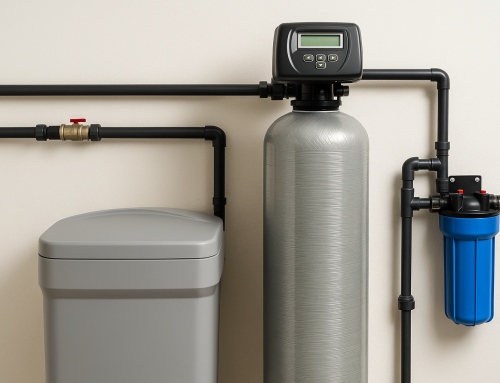
Point-of-entry (POE) systems treat all water entering the home, protecting appliances, baths, and drinking water at the tap. Point-of-use (POU) systems—like under-sink filters or countertop devices—treat water at a single faucet, which can be useful for drinking water if whole-house treatment isn’t feasible.
Sediment and Carbon Filters
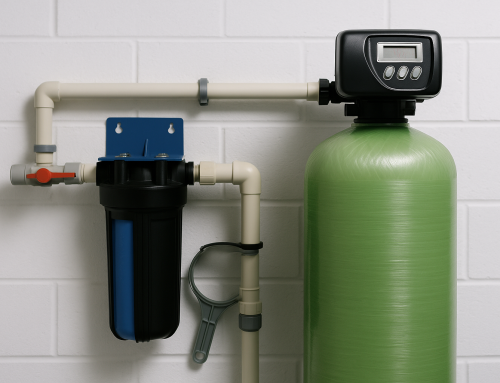
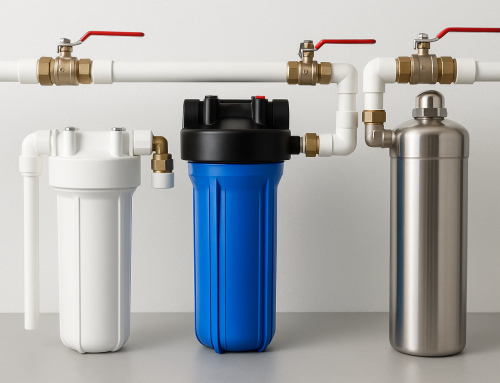
Sediment filtration removes particles that protect bacteria from disinfection and can harbor microbial growth. Activated carbon reduces organic compounds that affect taste and odor but does not remove bacteria on its own unless combined with a disinfection step. Combining sediment, carbon, and disinfection provides layered protection.
Advanced Systems: Reverse Osmosis and Ultrafiltration
Reverse osmosis (RO) and ultrafiltration membranes can remove bacteria and other impurities at the point of use. RO offers high-quality drinking water but is generally used only for POU applications due to wastewater production and lower flow rates. Ultrafiltration provides a membrane barrier effective against bacteria while maintaining higher flow rates.
Maintaining Your System
Once you install a system, regular maintenance keeps it effective. Key tasks include:
- Replacing UV lamps and filter cartridges on schedule
- Monitoring chlorine feeds and storage if using chemical treatment
- Scheduling annual water testing to confirm ongoing safety
- Checking wellhead integrity and drainage to prevent surface contamination
Choosing the Right Solution
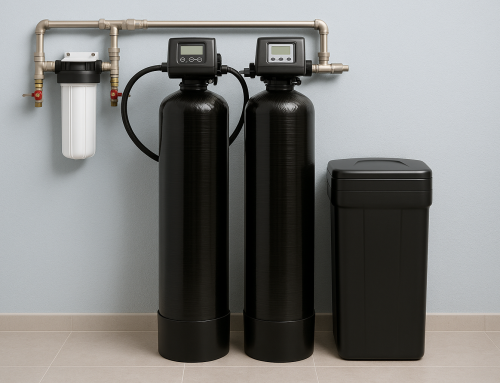
Select a treatment based on test results, water quality, household needs, and local risks. Many homeowners find layered approaches—pre-filtration, disinfection (UV or chlorine), and a POU RO or carbon filter—offer reliable protection and excellent-tasting water.
Working with a professional ensures the system is sized, installed, and maintained correctly. For personalized recommendations and to schedule a consultation or installation, reach out to Custom Filtration Systems to set up an appointment. Their team can test your water, explain options, and design a system that fits your home and budget.
Conclusion
Bacterial contamination of well water can be a serious but manageable problem. Regular testing, the right combination of filtration and disinfection, and proper maintenance will keep your water safe. If you suspect contamination or want a professional assessment, contact Custom Filtration Systems to book an appointment and protect your home’s water supply.