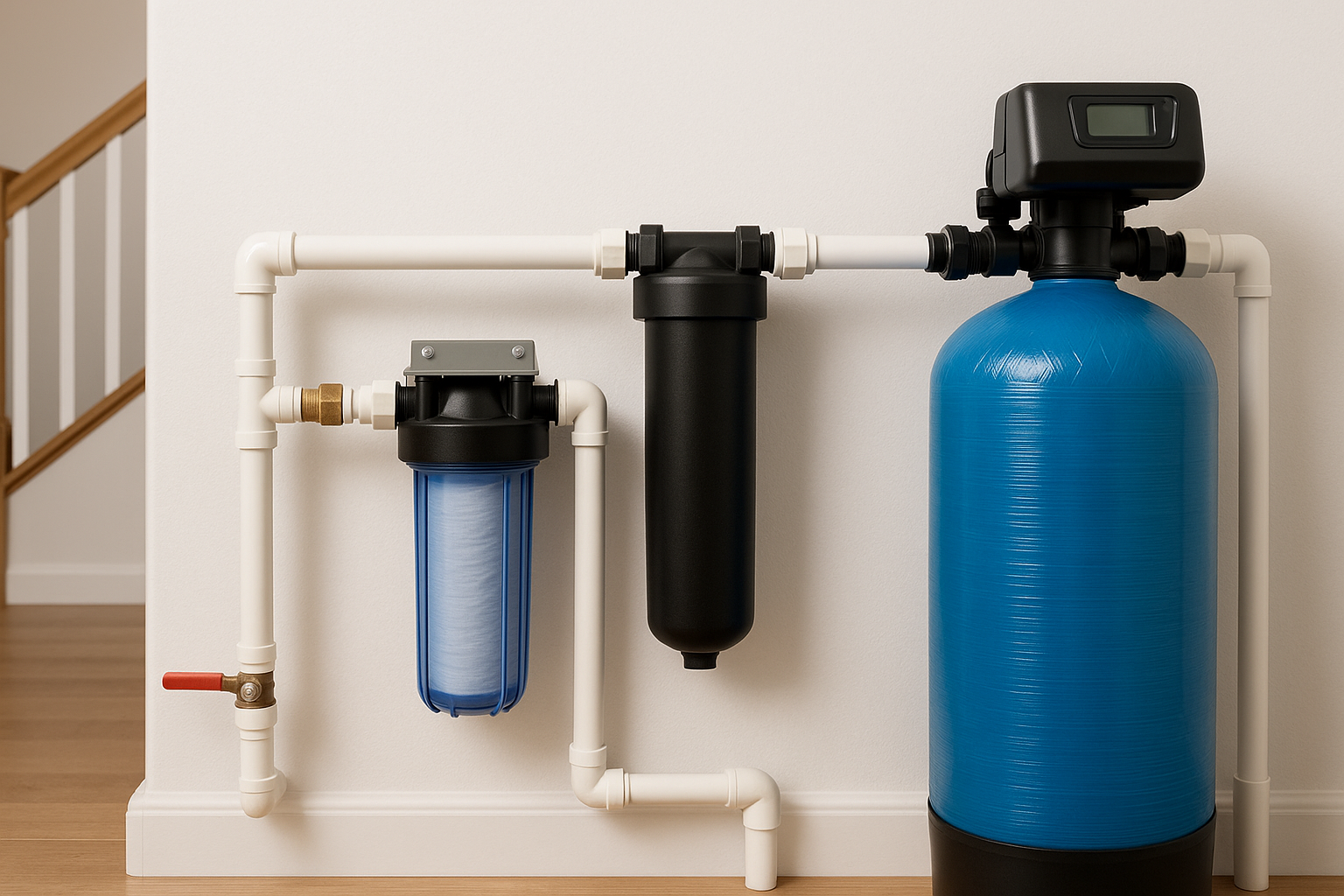
Why Install a Whole House Well Water Filtration System?
If your home draws water from a private well, treating that water at the point it enters your house gives you cleaner, safer water for every tap—drinking, bathing, laundry, and appliances. Whole house well water filtration systems remove contaminants that can stain fixtures, damage plumbing, shorten appliance life, and pose health risks. A properly designed system improves water taste and odor while protecting your family and investment.
Common Well Water Contaminants
Understanding what’s in your well water guides the type of filtration you need. Here are the most common culprits:
- Sediment: Sand, silt, and organic matter that clogs fixtures and wears out equipment.
- Hardness Minerals: Calcium and magnesium cause scale buildup on pipes and appliances.
- Iron & Manganese: Cause orange, brown, or black staining and metallic tastes.
- Hydrogen Sulfide: The rotten-egg smell often linked to sulfur bacteria.
- Bacteria & Viruses: Coliforms and pathogens can be present in poorly sealed wells.
- Nitrates and Agricultural Chemicals: Runoff can introduce nitrates or pesticides into shallow wells.
Types of Whole House Filtration Systems
No single system treats every problem. Most effective installations combine technologies in stages to target specific contaminants.
Sediment Filters
These are the first line of defense. Sediment filters (spun or pleated cartridges) remove sand, silt, and rust particles, protecting downstream equipment and improving filter life.
Activated Carbon Filters
Carbon filters adsorb chlorine (if present), organic compounds, and reduce taste and odor issues. They’re not effective for heavy metals, hardness, or microbes but are excellent as part of a multi-stage system.
Water Softeners (Ion Exchange)
Softening systems exchange sodium or potassium ions for calcium and magnesium to stop scale buildup. While they reduce hardness, softeners don’t remove iron bacteria, some forms of iron, or pathogens on their own.
Oxidizing Filters and Iron Removal
For iron, manganese, or hydrogen sulfide, oxidizing filters (air injection, chemical oxidizers) or catalytic media can convert dissolved contaminants into particulate form that can be filtered out.
UV Disinfection
Ultraviolet systems inactivate bacteria, viruses, and other microorganisms without chemicals. UV is a great safety layer when testing shows microbial contamination.
Point-of-Use Reverse Osmosis
RO systems at a kitchen sink offer the highest level of dissolved contaminant removal. Whole-house RO is rare and costly; many homeowners combine a whole-house pre-treatment system with a point-of-use RO for drinking water.
Choosing the Right System
Follow these steps to match your filtration to your well water needs:
- Test your water: A comprehensive lab test shows what contaminants are present and at what levels. Test for bacteria, nitrates, metals, hardness, and any local concerns.
- Determine flow rate: Size the system to meet your peak household demand (gallons per minute) so pressure and performance stay consistent.
- Choose certified components: Look for NSF/ANSI certifications for a system’s claimed reductions.
- Consider seasonal and long-term changes: Groundwater quality can shift—plan for maintenance and scalability.
Installation, Maintenance, and Costs
Professional installation ensures proper placement, backwash lines (if needed), and integration with your well pump and pressure tank. Typical maintenance tasks include:
- Replacing sediment and carbon cartridges every 3–12 months depending on load.
- Regenerating water softeners on a set schedule or meter-based system.
- Cleaning or replacing media in iron filters and backwashing as recommended.
- Replacing UV lamps annually and cleaning sleeves for effective disinfection.
Costs vary widely by technology and house size. A basic sediment + carbon system is relatively affordable; advanced multi-stage systems with softening, iron removal, and UV will be a larger investment but save on appliance repairs and health risks over time.
Benefits and Return on Investment
Whole house filtration protects plumbing, extends appliance life, reduces soap and detergent usage, and improves comfort by removing odors and staining. Health benefits include lowering exposure to harmful microbes and chemical contaminants. Over time, these savings combined with improved quality of life often justify the initial cost.
Final Tips Before You Buy
- Get a detailed water test and ask for a solution customized to those results.
- Request references and certifications from contractors, and compare warranties.
- Plan for routine maintenance and know filter replacement costs up front.
Conclusion
Whole house well water filtration systems provide comprehensive protection for your home and family when tailored to your well’s specific water quality. Start with a professional water test, choose equipment certified for the contaminants you face, and schedule installation with an experienced provider. For personalized advice and to schedule an appointment, reach out to Custom Filtration Systems—our team can help design the right whole-house solution for your well.