Introduction
If your home draws water from a private well, you likely enjoy a reliable source independent of municipal supplies—but that doesn’t mean your water is free from issues. Reverse osmosis (RO) is a popular and effective technology for treating well water to improve taste, remove contaminants, and protect your family’s health. This guide explains how RO works, why it’s a strong choice for well water, what to consider before installing a system, and practical tips for maintenance.
What Is Reverse Osmosis?
Reverse osmosis is a filtration process that forces water through a semi-permeable membrane to remove dissolved solids and many types of contaminants. Unlike standard sediment or carbon filters, an RO membrane blocks very small particles—results often measured in parts per million (ppm) or even parts per billion (ppb).
How Reverse Osmosis Works
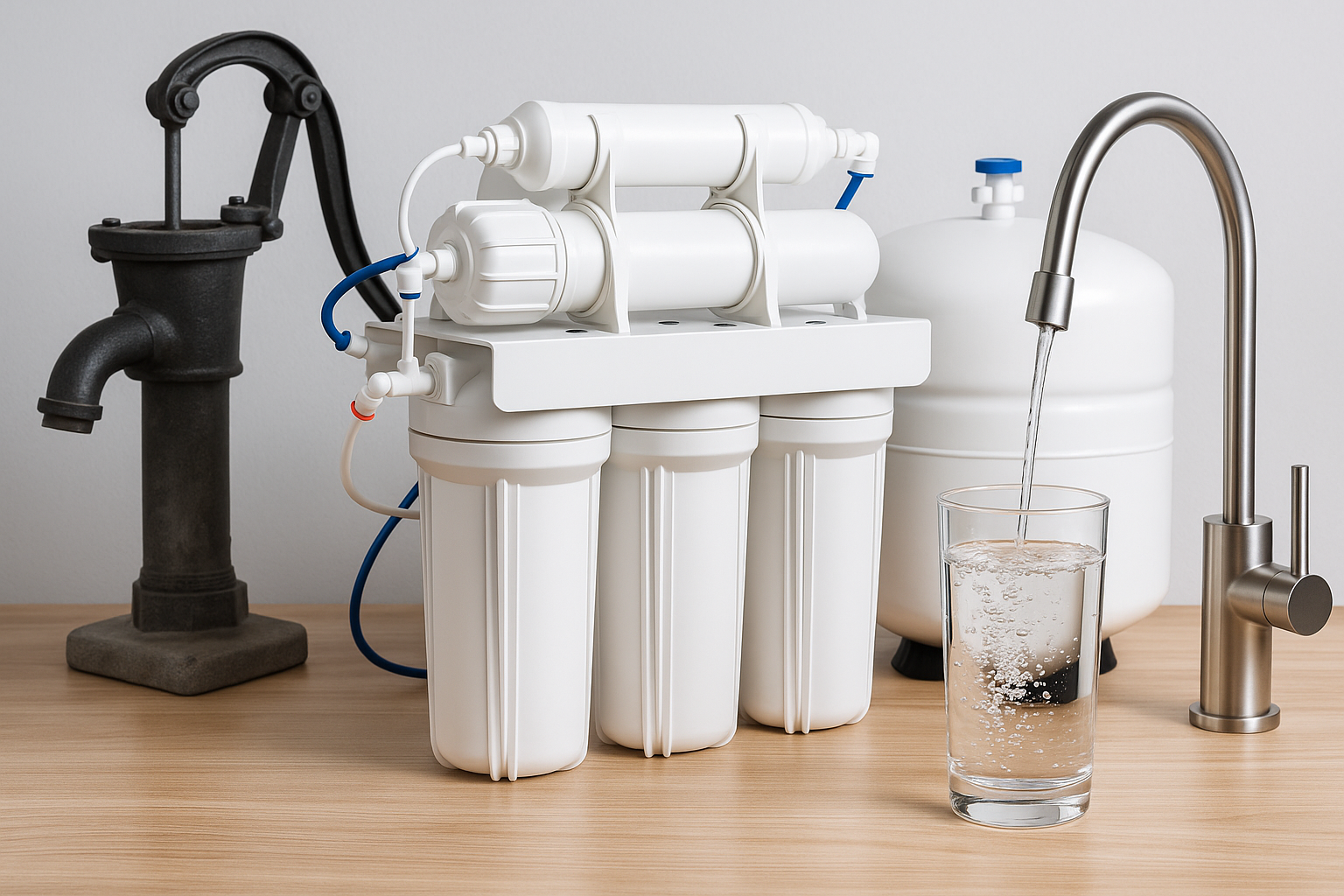
- Pre-filtration: Sediment and carbon pre-filters remove large particles, chlorine, and organics that could damage the RO membrane.
- RO membrane: Under pressure, water is pushed through the membrane; clean water (permeate) passes through while contaminants (concentrate/reject) are flushed away.
- Post-filtration and storage: A final carbon polisher may be used to improve taste before water goes into a storage tank and to the faucet.
Why Well Water Often Benefits from RO
Well water quality can vary widely depending on location, geology, and contamination sources. Common reasons homeowners choose RO include:
- High dissolved solids: Minerals like sodium, chloride, and sulfate can create poor taste or scale.
- Nitrates: Agricultural runoff and septic systems can introduce nitrates, which are a health concern—especially for infants.
- Volatile organic compounds (VOCs) and some pesticides: These can be present near industrial or farming areas.
- Microbial concerns: While RO is not a primary disinfection method, it can reduce bacteria and protozoa when combined with proper pre- and post-treatment.
Benefits of Using RO for Well Water
- Excellent contaminant reduction: RO membranes remove a wide range of dissolved solids and many harmful chemicals that conventional filters miss.
- Improved taste and odor: Removing minerals and organics often results in noticeably better-tasting water.
- Lower maintenance at the tap: Drinking and cooking water quality is consistently high when using a point-of-use RO system.
- Protects appliances and fixtures: Reducing dissolved minerals can help extend the life of kettles, coffee makers, and other devices that use water.
Limitations and Important Considerations
Reverse osmosis is powerful, but it’s not a one-size-fits-all solution. Be aware of these factors:
- Water waste: Traditional RO systems produce a stream of reject water; newer high-efficiency models reduce this ratio.
- Pre-treatment needs: Hard water, iron, manganese, or heavy microbial loads can foul membranes—pre-filters or water softeners may be required.
- Removes beneficial minerals: RO strips many minerals; some households choose remineralization filters for taste and pH balance.
- Not a substitute for disinfection: If your well has bacterial contamination, UV or chlorination is often recommended alongside RO.
Choosing the Right RO System
Consider these factors when selecting a system for well water:
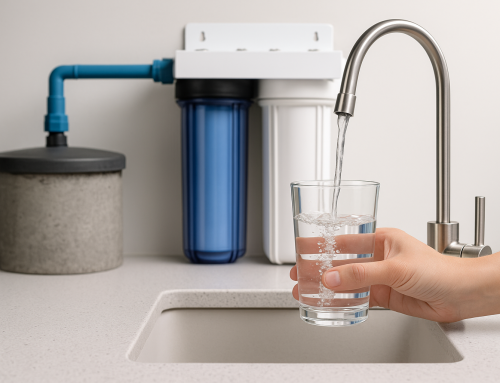
- Point-of-use vs. whole-house: Most RO systems are installed under the kitchen sink for drinking water. Whole-house RO exists but is costly and requires large-scale pre-treatment.
- Capacity and recovery rate: Match system output to household demand and look for efficient models that minimize wastewater.
- Certifications: Look for NSF/ANSI certifications for contaminant reduction claims.
- Local water testing: Test your well before buying. A water report will guide pre-treatment choices and membrane selection.
Installation & Maintenance Tips
- Start with a water test: A comprehensive test identifies nitrates, iron, hardness, bacteria, and other issues so you can design the right system.
- Maintain pre-filters: Replace sediment and carbon filters on schedule to protect the membrane.
- Sanitize periodically: Sanitize the system and storage tank to limit bacterial growth.
- Replace the membrane: Membrane life varies; expect replacement every 2–5 years depending on feed water quality and use.
- Monitor pressure: RO performance depends on adequate water pressure—consider a booster pump if needed.
Cost & Long-Term Value
Initial costs vary by system size and features. Point-of-use RO systems are affordable for most homeowners, while whole-house RO can be a significant investment. Consider long-term savings from reduced bottled water use, fewer appliance repairs, and improved health and household convenience.
Conclusion
Reverse osmosis can be an excellent solution for many well water problems—especially for improving drinking water quality and addressing dissolved contaminants. The key is to test your well, choose the right configuration (and any necessary pre-treatment), and maintain the system properly. If you’re unsure what’s best for your water, reach out to Custom Filtration Systems to schedule an appointment and get a personalized recommendation.