Introduction
Choosing the right whole home water filtration system protects your family, appliances, and plumbing while improving taste and odor. With many technologies available, it helps to know the strengths and limitations of each. This guide walks through the best types of whole house water filters, how they work, and how to pick the right system for your home.
Why Whole Home Water Filtration Matters
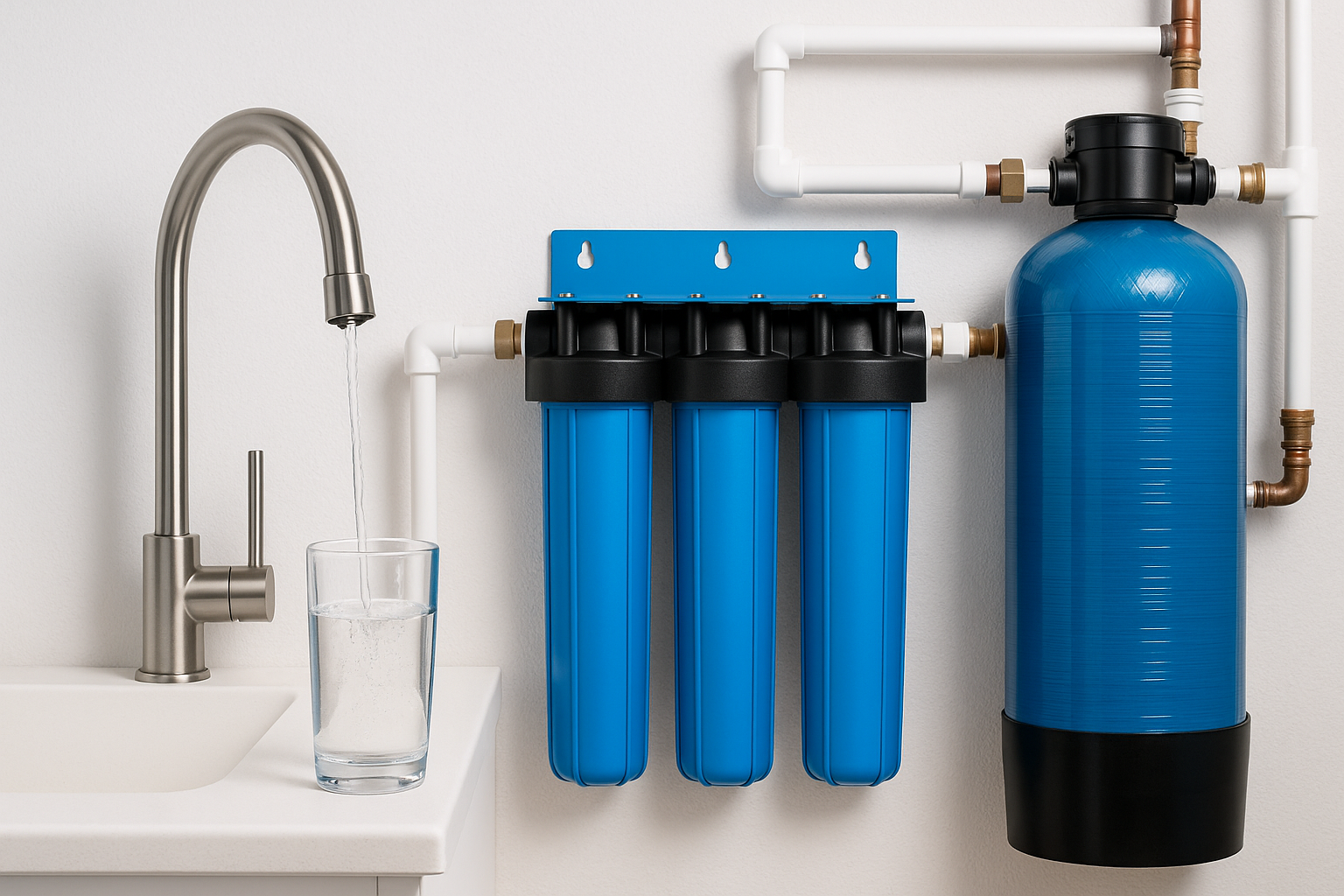
Whole home (point-of-entry) filtration treats water at the main supply so every faucet, shower, and appliance receives filtered water. Benefits include:
- Cleaner drinking, cooking, and bathing water
- Extended life for appliances and plumbing
- Reduced scale, stains, and odors
- Protection against contaminants that affect health and taste
Top Types of Whole Home Water Filtration
Sediment Filters
Sediment filters are the first line of defense. They capture sand, silt, rust, and other particulates to protect downstream media and equipment. These filters come in pleated or spun formats and are rated by micron size (common sizes are 5, 10, or 20 microns).
Best for: Protecting more sensitive filters and improving water clarity. Not designed for dissolved contaminants.
Activated Carbon (Granular & Block)
Activated carbon is one of the most common whole house filter media. It adsorbs chlorine, chloramines (with catalytic carbon), VOCs, pesticides, and many tastes and odors. Carbon block filters offer more consistent filtration than granular carbon and can remove smaller particles.
Best for: Improving taste and odor, reducing chlorine and organic chemicals.
KDF (Kinetic Degradation Fluxion) Media
KDF is a copper-zinc alloy media that uses redox reactions to reduce chlorine, hydrogen sulfide, and some heavy metals. It’s often combined with carbon in whole house systems to extend carbon life and improve performance.
Best for: Homes with high chlorine or iron concerns, or where microbiological growth might be an issue in the carbon bed.
Water Softeners (Ion Exchange)
Ion exchange softeners remove hardness minerals (calcium and magnesium) by exchanging them for sodium or potassium. While they’re not traditional “filters” for chemicals or microbes, they prevent scale buildup and improve soap performance.
Best for: Addressing hard water issues to protect plumbing and appliances. Does not remove most contaminants like lead or bacteria.
Reverse Osmosis (RO) — Whole Home Considerations
Reverse osmosis is excellent for removing dissolved salts, heavy metals, fluoride, and many other contaminants. Whole house RO systems exist but require significant flow capacity and are more expensive. Many homeowners opt for whole house pre-filtration with a dedicated RO unit at key drinking-water taps.
Best for: Homes needing comprehensive removal of dissolved contaminants—often paired with a point-of-use RO for drinking water.
UV Disinfection
Ultraviolet systems effectively inactivate bacteria, viruses, and protozoa without chemicals. UV is typically used after pre-filtration (to remove turbidity) and is excellent for well-water users concerned about microbial contamination.
Best for: Treating microbiological threats; must be combined with other media to address chemical contaminants or particulates.
Ceramic and Specialty Media
Ceramic filters physically block bacteria and protozoa and are sometimes used in combination with carbon. Specialty media like greensand, birm, or manganese oxide target iron, manganese, and hydrogen sulfide.
Best for: Specific mineral removal (iron, manganese) or microbiological filtration in niche situations.
Multi-Stage and Combination Systems
Many whole home setups combine technologies: sediment pre-filter > activated carbon > KDF or media bed > water softener > UV. These multi-stage systems provide broad protection and address a range of contaminants while preserving flow rate.
Best for: Homes with multiple water quality issues or where a single technology won’t handle everything.
How to Choose the Right System
- Test your water: Understand hardness, pH, iron, chlorine, lead, nitrates, and microbiological presence before shopping.
- Consider flow rate: Whole home systems must handle household peak flow (gallons per minute) without pressure drop.
- Check certifications: Look for NSF/ANSI certifications for specific contaminant reductions.
- Factor in maintenance: Filter replacements, media regeneration, and UV lamp changes are ongoing costs.
- Budget vs. performance: Balance upfront cost with long-term savings from protected appliances and reduced bottled water use.
Getting Professional Help
Installing a whole home system is an investment. A professional can analyze your water test, recommend the right media and sizing, and ensure correct installation and warranty compliance. Reach out to Custom Filtration Systems to schedule an appointment and get a tailored solution for your home.
Conclusion
The best whole home water filtration for you depends on your specific water quality issues, household flow needs, and budget. Sediment and activated carbon are cornerstones for many homes, while KDF, softeners, UV, and specialty media address targeted problems. Start with testing, then consult a pro like Custom Filtration Systems to design and install the right multi-stage solution for clean, safe water throughout your home.