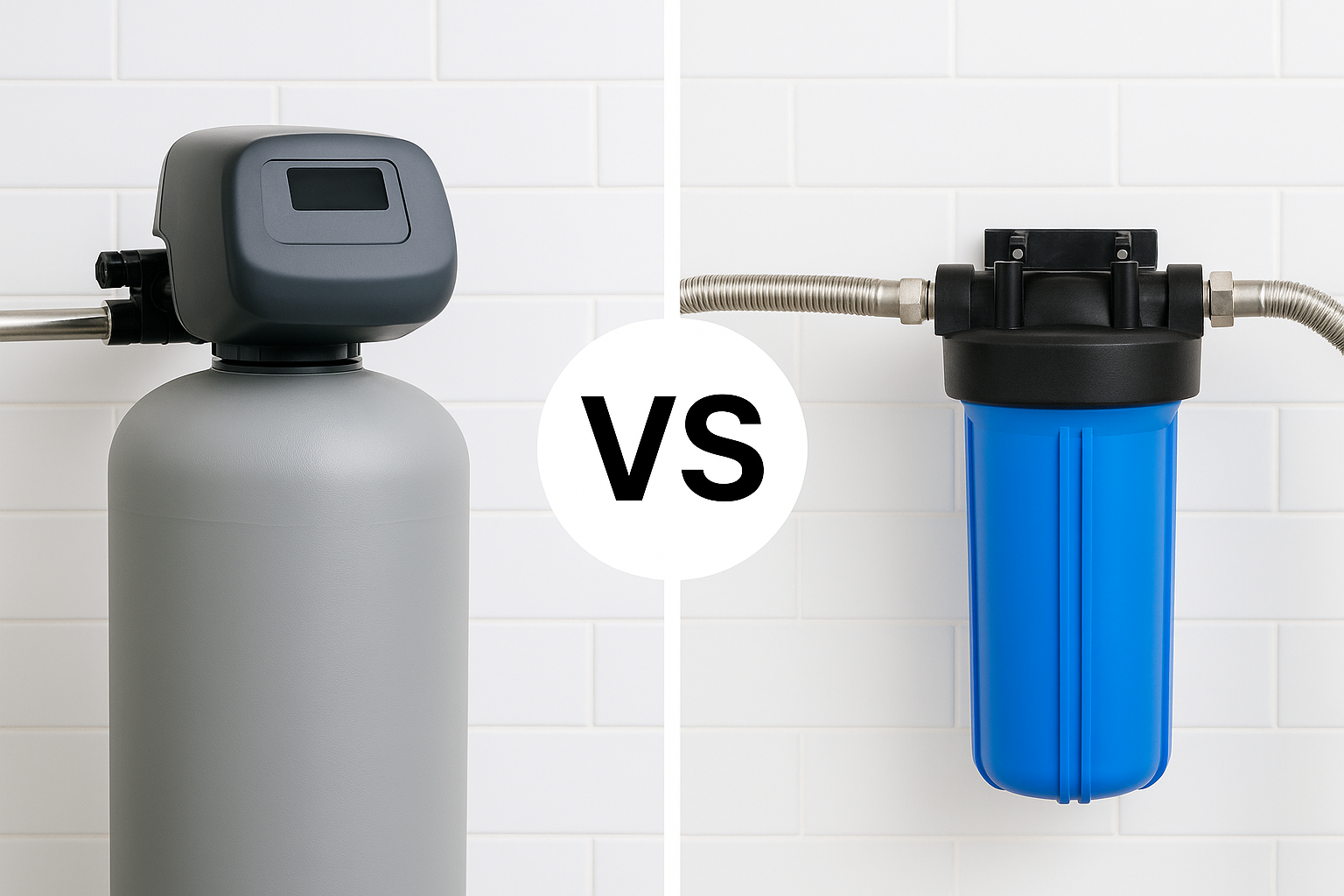
Choosing between a water softener and a water filter is one of the most common questions homeowners face when trying to improve their water quality. While both systems improve your water, they solve very different problems. This guide explains how each works, the benefits and limitations, key differences, and practical steps to decide which solution—or combination—fits your household.
What Is a Water Softener?
How it works
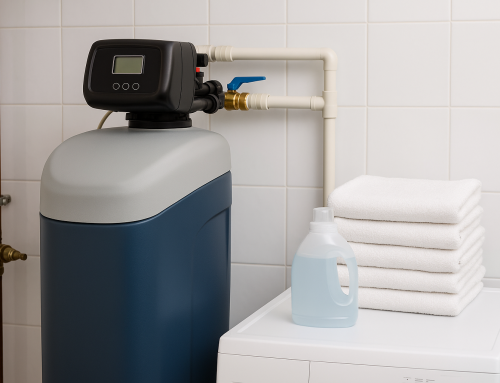
Water softeners address hard water—water high in calcium and magnesium ions. The most common softeners use ion exchange: hard minerals are swapped for sodium or potassium ions as water passes through a resin bed. Periodically, the system regenerates using a salt or brine solution to flush the trapped minerals away.
Benefits
- Prevents scale buildup in pipes, water heaters, and appliances.
- Improves soap and detergent performance, reducing soap scum and spotting.
- Makes cleaning easier and can extend the lifespan of appliances such as dishwashers and washing machines.
- Leaves hair and skin feeling softer for many people.
Limitations
- Does not remove contaminants like bacteria, chlorine, lead, or volatile organic compounds (VOCs).
- Introduces sodium into the water (minimal amounts), which may be a concern for people on sodium-restricted diets—potassium-based softeners are an alternative.
- Requires periodic salt or maintenance and uses water during regeneration.
What Is a Water Filter?
How it works
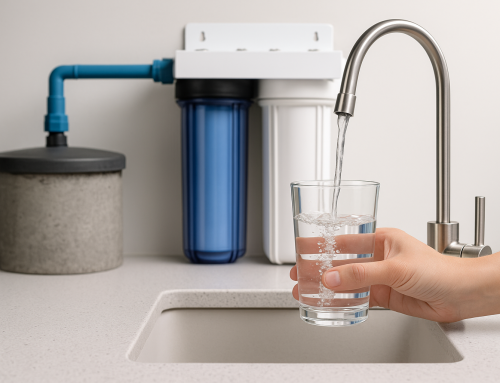
Water filters come in many types—activated carbon, reverse osmosis (RO), ultrafiltration, ceramic, and more. Each targets specific contaminants. For example, carbon filters are great for chlorine, taste, and odor, while RO systems remove a broad range of dissolved solids, heavy metals, and some pathogens.
Benefits
- Improves taste, smell, and appearance of drinking water.
- Can remove specific harmful contaminants such as lead, chlorine, pesticides, or bacteria (depending on the technology).
- Many systems are available at point-of-use (under-sink, countertop) or whole-house scale.
Limitations
- Most filters do not address hardness (calcium and magnesium) unless specifically designed to do so.
- Some systems, like RO, can waste water and may remove beneficial minerals.
- Requires regular filter replacement and maintenance to remain effective.
Key Differences at a Glance
Contaminant focus
Water softeners target hardness minerals (calcium and magnesium). Filters target chemical, biological, and particulate contaminants. They solve different problems, so one is not always a substitute for the other.
Impact on health and appliances
Filters are typically the choice for improving drinking water safety and taste. Softeners protect plumbing and appliances, but they don’t make water safer to drink from a contaminant perspective.
Installation and maintenance
Softener systems are often installed at the main water line for whole-house treatment and require salt replenishment. Filters vary widely—point-of-use filters are easy to install and maintain, while whole-house filtration systems require professional sizing and periodic cartridge or membrane changes.
Cost considerations
Initial costs, ongoing maintenance, and water usage differ. Softeners involve salt and occasional service; filters involve cartridge or membrane replacement. Reverse osmosis and whole-house systems tend to be costlier up front.
How to Choose: Practical Steps
1. Test your water
Begin with a comprehensive water test. Knowing hardness levels and specific contaminants in your water will guide you to the right solution.
2. Prioritize the problems you want to solve
If you’re battling scale and appliance damage, a softener is likely your priority. If taste, odors, lead, or microbial contamination are the concern, a filtration system is the right focus.
3. Consider combination systems
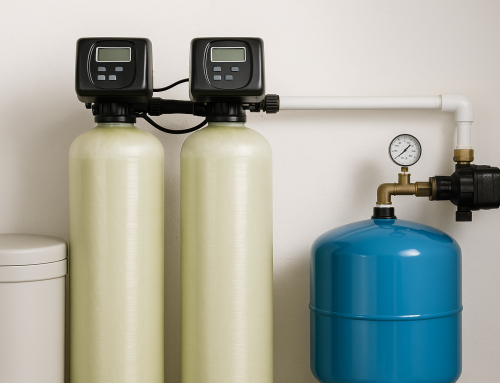
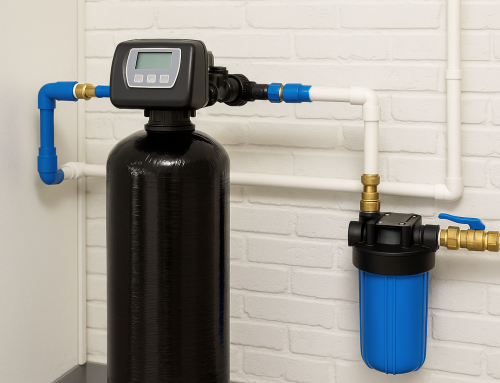
Many homes benefit from both: a whole-house softener to protect plumbing and appliances, paired with point-of-use filtration (or RO) for drinking water. This hybrid approach gives you the best of both worlds.
4. Get professional advice
Sizing, local water characteristics, and household needs matter. Reach out to Custom Filtration Systems for an appointment and personalized recommendations based on your water test results and lifestyle.
Conclusion
Water softeners and water filters serve different—but often complementary—roles. Softening improves water’s interaction with your home and appliances by removing hardness, while filtration improves safety, taste, and contaminant removal. The right choice depends on what your water test reveals and the problems you want to solve. For tailored guidance and to schedule an appointment, contact Custom Filtration Systems—an expert can help you design the system that fits your home and budget.