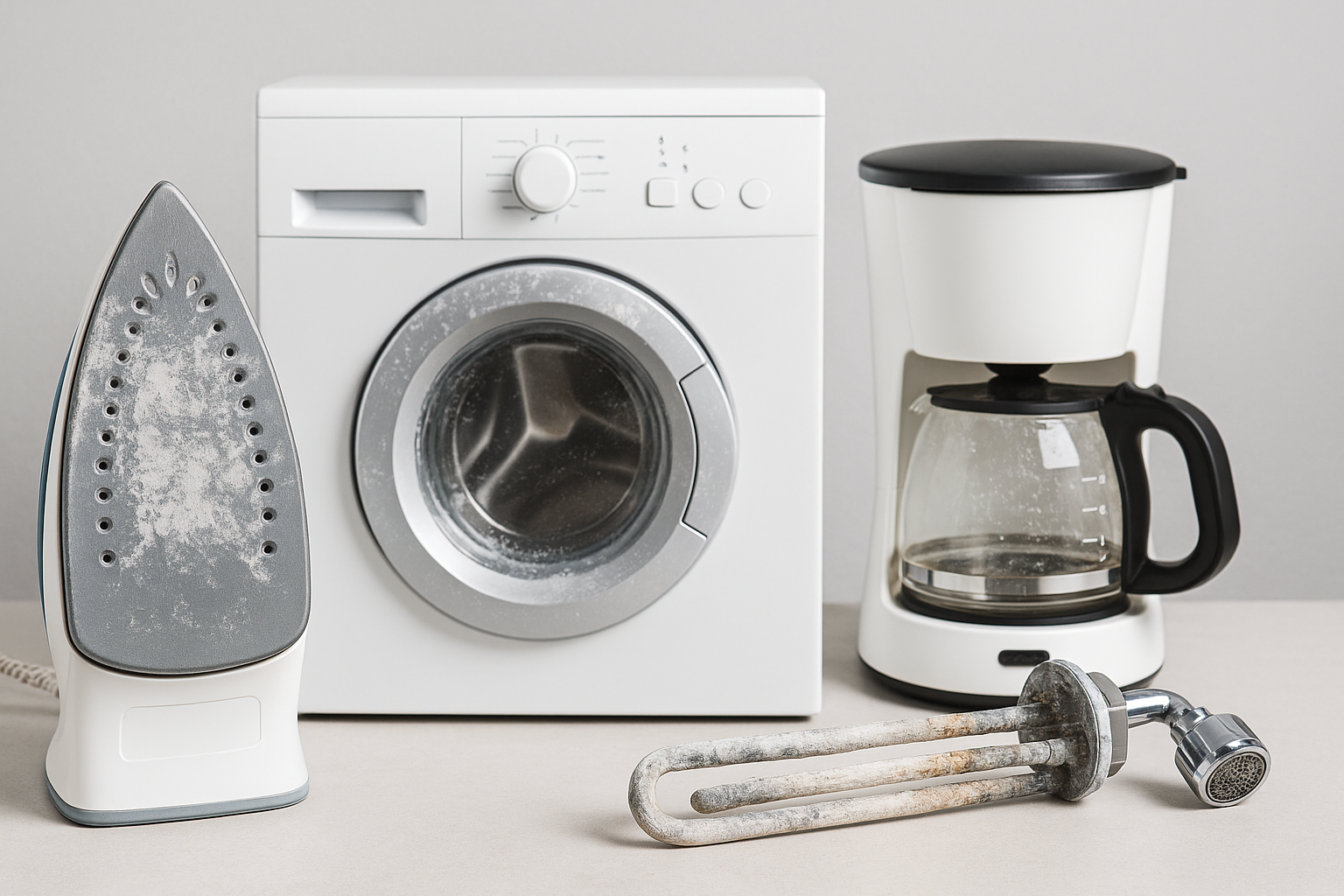
Understanding Hard Water
Hard water contains high levels of dissolved minerals, chiefly calcium and magnesium. Those minerals aren’t harmful to your health in most cases, but they leave behind mineral deposits—commonly called limescale—that build up inside pipes and appliances. Over time this buildup creates performance problems, higher energy bills, and shortened appliance lifespans.
How Hard Water Affects Common Appliances
Mineral deposits from hard water impact appliances in several predictable ways. Below are the main appliances homeowners should watch.
Water Heaters
Limescale forms on the heating elements and inner surfaces of water heaters. That insulating layer reduces heat transfer, forcing the heater to run longer and use more energy. The result is higher utility bills, more frequent repairs, and a shorter overall lifespan for the unit.
Dishwashers
In dishwashers, mineral deposits clog spray arms and filters, leaving dishes spotted and reducing cleaning effectiveness. Over time seals and valves can stiffen or fail, increasing repair needs. Hard water also causes detergent to work less effectively, so you may add more detergent to compensate—another hidden cost.
Washing Machines
Hard water reduces soap and detergent efficiency, leaving residues on clothing and inside the machine. Mineral buildup can collect in pumps and hoses, reducing water flow and increasing wear. The mechanical strain and detergent inefficiency both contribute to shortened service life for washers.
Refrigerator Ice Makers and Coffee Machines
Ice makers and espresso machines are particularly vulnerable because even small mineral deposits can alter taste and clog narrow lines or nozzles. Scaling in coffee makers changes flavor and reduces heating efficiency, while ice makers may produce cloudy or misshapen ice and require frequent cleaning.
Faucets, Showerheads, and Small Appliances
Faucets and showerheads get clogged with mineral deposits, reducing flow and pressure. Small appliances like kettles, irons, and humidifiers suffer from reduced performance and need more frequent descaling.
Hidden Costs: Energy, Repairs, and Replacement
Hard water increases the operational costs of appliances in three primary ways:
- Higher energy use: Appliances work harder when insulated by scale, especially water heaters.
- More repairs: Clogged parts and damaged seals mean more service calls and replacement parts.
- Shorter lifespan: Accumulated wear often leads to earlier replacement, increasing long-term household costs.
Research and industry reports show that water heaters and clothes washers can lose significant efficiency with heavy scaling, translating to real dollars on your utility bills each year.
Signs Your Appliances Are Affected by Hard Water
- White or chalky buildup around fixtures and appliance parts
- Reduced water flow from showerheads and faucets
- Spotted or cloudy dishes coming out of the dishwasher
- Stiff or dingy clothing after washing
- Higher-than-normal energy bills or frequent appliance repairs
Practical Solutions to Protect Appliances
The good news is hard water is manageable. A few common strategies can cut mineral buildup and extend appliance life:
Water Softeners
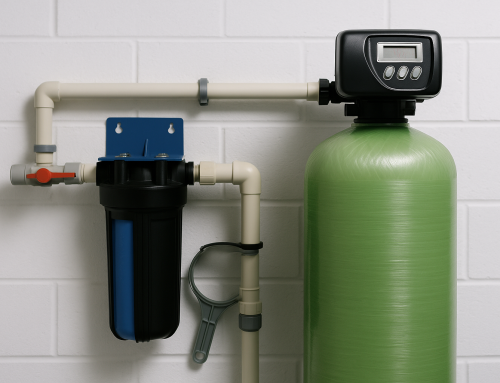
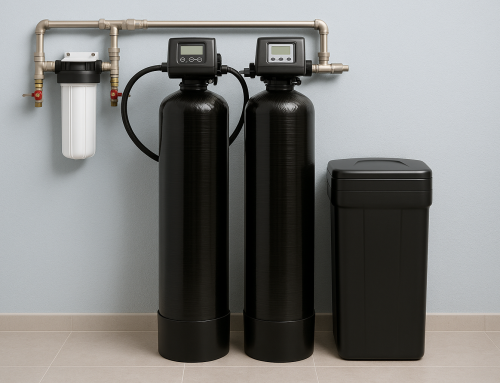
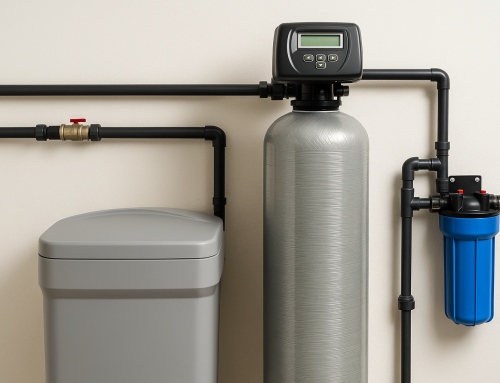
Ion-exchange water softeners replace calcium and magnesium ions with sodium or potassium, preventing limescale formation. Softened water protects heating elements and plumbing, increases detergent efficiency, and reduces the need for descaling.
Point-of-Use Filters and Descalers
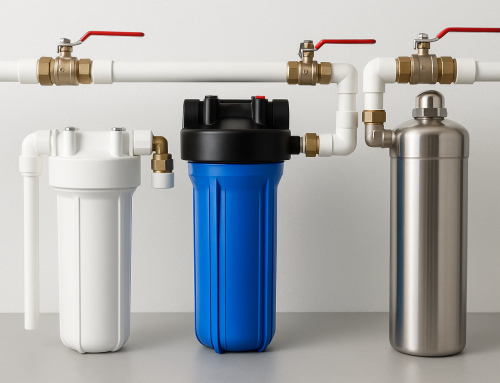
For specific appliances—like coffee makers or ice machines—point-of-use filters or inline sediment filters can help. Electronic or magnetic descalers claim to reduce buildup, though results vary; they’re often best used in combination with filtration or a full softening system.
Regular Maintenance
Even with treatment, regular maintenance is important: descale coffee machines, clean dishwasher filters, flush water heaters per manufacturer recommendations, and check for mineral buildup during routine appliance inspections.
How to Choose the Right Treatment and When to Call a Professional
Start by testing your water. A simple hardness test will tell you the concentration of minerals so you can match treatment to your needs. For whole-home protection, an appropriately sized water softener is usually the most effective solution. For targeted protection—like a coffee station or refrigerator—point-of-use solutions may be sufficient.
If you’re unsure what system fits your home, or if you’re experiencing persistent appliance issues tied to water quality, reach out to Custom Filtration Systems for an appointment. A professional evaluation will provide clarity on hard water severity and recommended solutions tailored to your appliances and budget.
Conclusion
Hard water quietly erodes appliance performance, increases energy and repair costs, and shortens equipment lifespan. The best defense is informed action: test your water, choose the right combination of softening or filtration, and keep up with routine maintenance. If you want expert guidance, reach out to Custom Filtration Systems for an appointment and protect the appliances that keep your home running smoothly.