Introduction
If you rely on a private well for your household water, keeping that water clean and safe is a top priority. Carbon filters are a popular, effective option for improving taste, odor, and removing many organic contaminants from well water. This guide explains how carbon filtration works, what it can and cannot remove, system options, maintenance needs, and when to pair carbon filtration with other treatments.
How Activated Carbon Works
The science behind adsorption
Activated carbon removes contaminants primarily through adsorption: molecules adhere to the porous surface of the carbon media. The high surface area of activated carbon makes it very effective at capturing chlorine, volatile organic compounds (VOCs), pesticides, and many taste- and odor-causing chemicals.
Common forms of carbon media
- Granular Activated Carbon (GAC): Loose granules in media tanks or cartridges allow for good flow and are common in whole-house systems.
- Carbon Block: Compressed carbon with a dense structure that often provides better particulate and chemical removal at point-of-use devices.
- Catalytic Carbon: Specially treated carbon that is more effective at removing chloramines and certain hard-to-remove contaminants.
What Carbon Filters Remove (and What They Don’t)
Effective for
- Chlorine and chloramine (taste and odor)
- Volatile organic compounds (VOCs) and many industrial solvents
- Pesticides and herbicides
- Taste- and odor-causing organic compounds
- Some disinfection byproducts
Not effective for
- Bacteria, viruses, and protozoa (requires UV or chemical disinfection)
- Dissolved minerals like calcium and magnesium (hardness)
- Most dissolved metals (iron, manganese may need specialized media)
- Nitrates and fluoride (need ion exchange, reverse osmosis, or other specific treatments)
Types of Systems for Well Water
Whole-house carbon systems
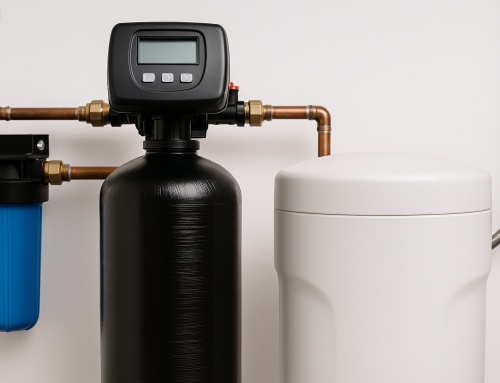
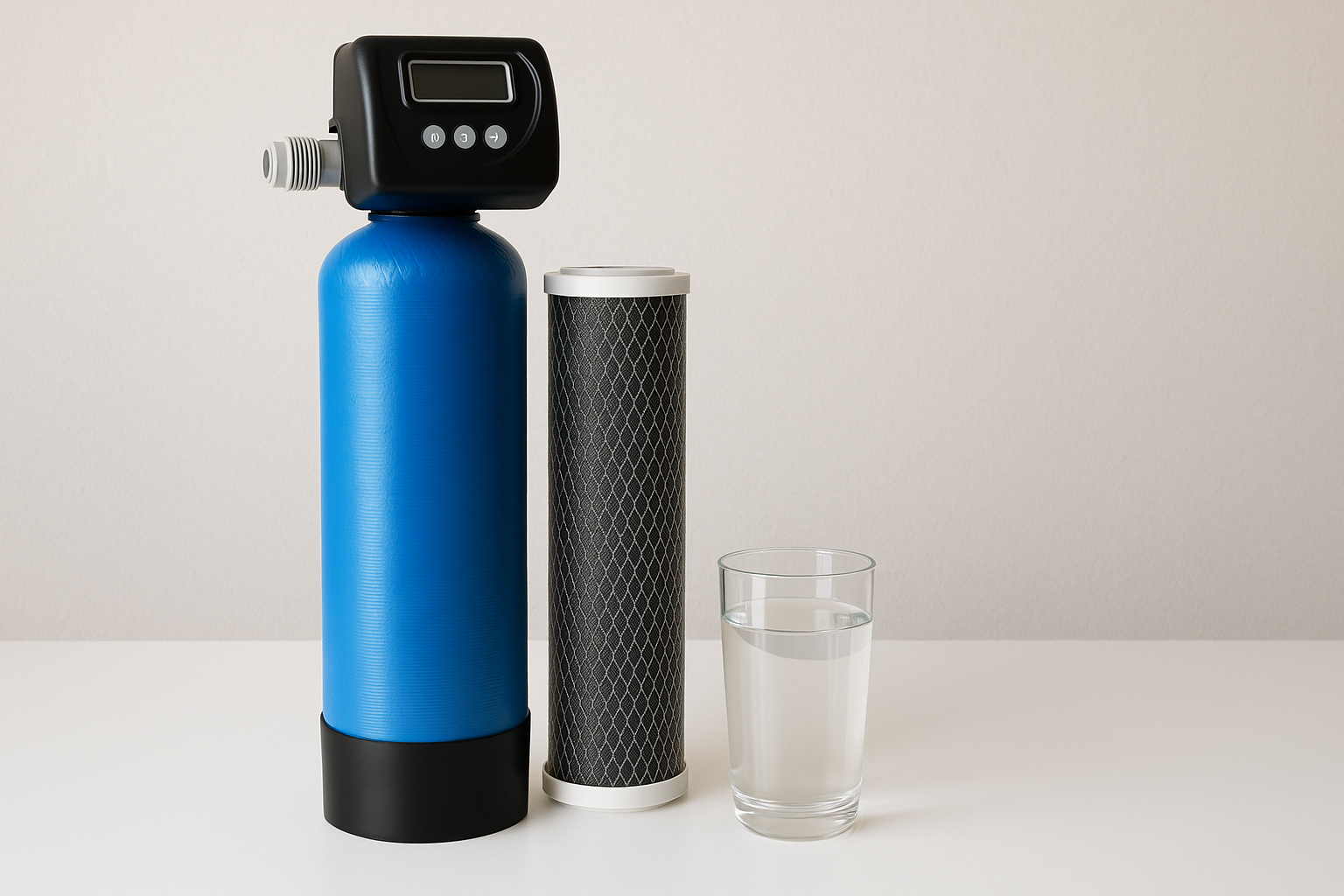
Whole-house (point-of-entry) carbon filters treat water as it enters your home, protecting plumbing, appliances, and providing improved taste and odor to every tap. These typically use GAC or catalytic carbon in a pressurized tank and may include a backwash function to remove trapped particulates.
Point-of-use carbon systems
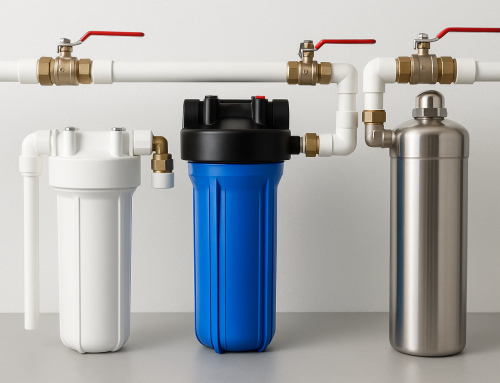
Under-sink carbon block filters and faucet-mounted units provide targeted treatment for drinking and cooking water. They often deliver greater contaminant reduction per cartridge but only protect the single tap.
Combination systems
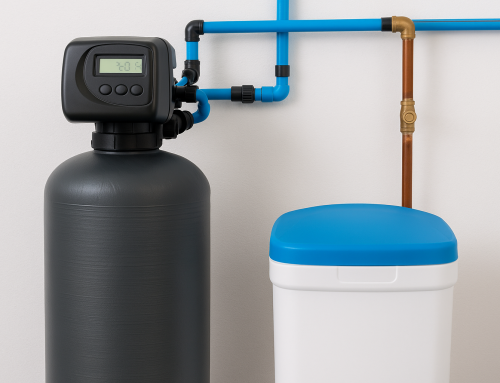
Carbon filters are commonly paired with sediment pre-filters, water softeners, iron removal filters, or UV disinfection to create a comprehensive treatment train tailored to the results of your water test.
Sizing, Installation, and Maintenance
Key sizing considerations
- Flow rate: Ensure the system can handle peak household demand (gallons per minute).
- Contact time: Adequate contact time between water and carbon improves removal—larger tanks increase contact time.
- Capacity: Media has a finite adsorption capacity; select a system sized for your contaminant levels and usage.
Installation tips
- Start with a comprehensive well water test before selecting equipment.
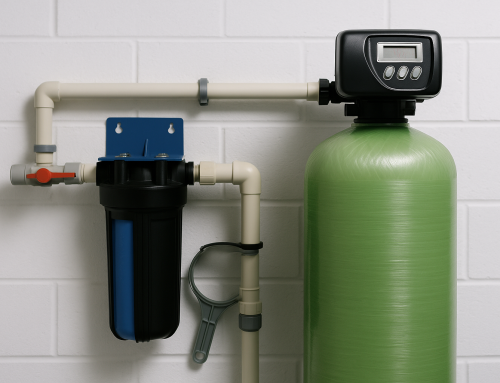
- Install a sediment pre-filter upstream to protect carbon media from clogging.
- Consider professional installation to ensure proper pressure, backwash plumbing, and integration with other treatment components.
Routine maintenance
Maintenance intervals vary by water quality and usage. Carbon cartridges typically require replacement every 6–12 months, while whole-house carbon tanks may need media replacement every 3–5 years or when breakthrough occurs. Regular testing and monitoring (taste, odor, lab tests) will signal when service is needed.
Testing and When to Combine Treatments
A detailed water test is essential. If your well contains bacteria, parasites, high iron, nitrate, or hardness, carbon alone will not suffice. Common combinations include:
- Carbon + UV for chemical removal and microbial disinfection
- Carbon + water softener for chemical and hardness control
- Carbon + iron filter or greensand for iron and manganese removal
- Carbon + reverse osmosis for high-purity drinking water at a single tap
Cost Considerations
Initial costs vary widely: point-of-use carbon cartridges can be inexpensive, while whole-house systems and professional installation are a larger investment. Factor in media replacement, routine maintenance, and any complementary treatments needed based on your water test.
Choosing a Reputable Installer
When selecting equipment and an installer, look for experience with well systems, references, and a clear maintenance plan. For personalized recommendations and professional installation, reach out to Custom Filtration Systems to schedule an appointment and get a system designed around your well water test results.
Conclusion
Activated carbon is a versatile, effective tool for improving well water taste, odor, and removing many organic contaminants. It’s best used as part of a treatment strategy informed by a comprehensive water test and paired with other technologies when needed. Contact Custom Filtration Systems for an appointment to evaluate your well and design the right solution for your home.