Introduction
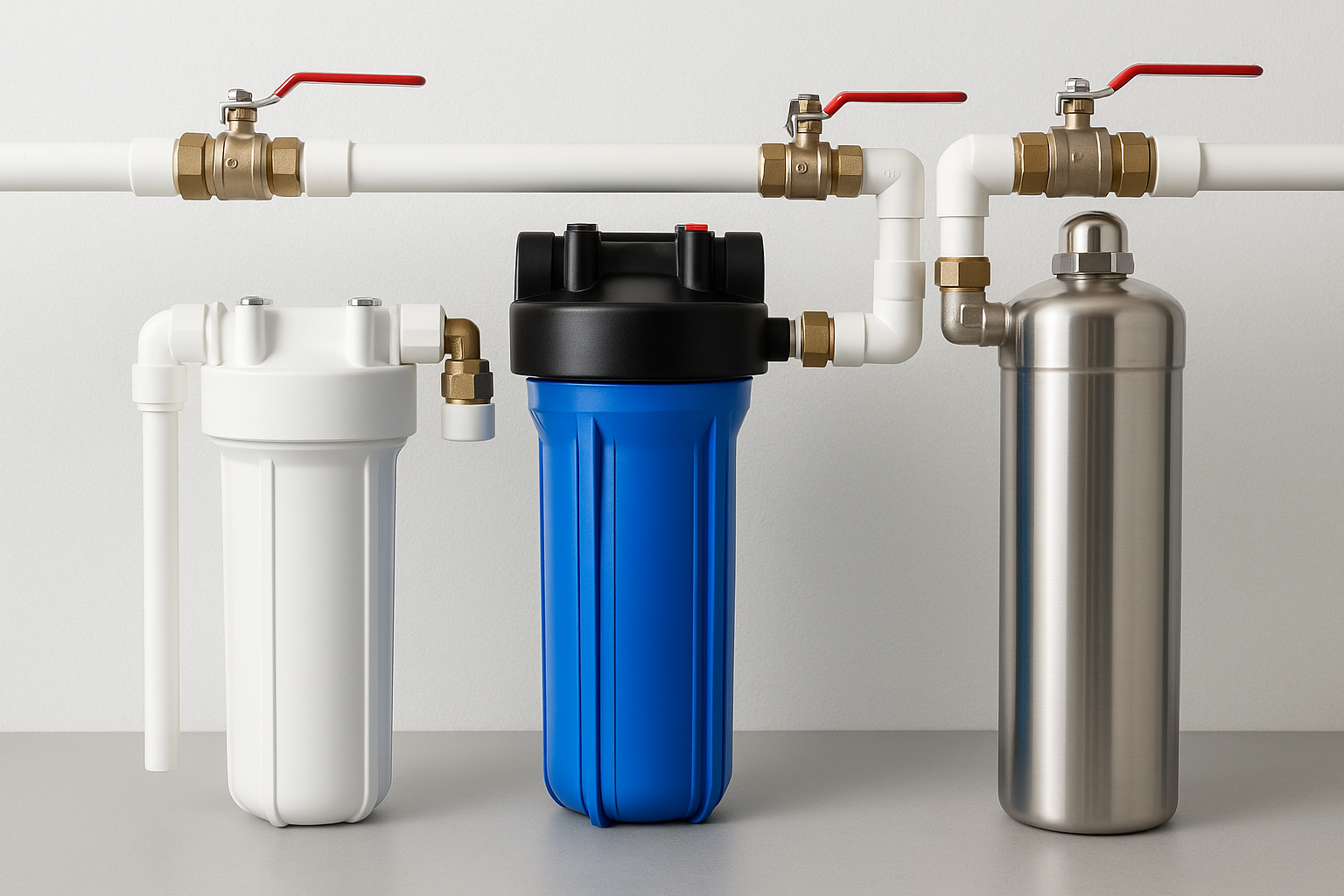
Choosing the right whole house water filter can feel overwhelming. There are many technologies, trade-offs, and performance metrics to consider. This guide compares the most common whole house filtration options, highlights what matters when selecting a system, and helps you pick the right solution for municipal or well water. If you’d like a professional evaluation, reach out to Custom Filtration Systems to schedule an appointment.
Types of Whole House Water Filters
Sediment Filters
Sediment filters are the first line of defense, removing sand, silt, rust, and large particulates. They help protect downstream equipment and improve the life of finer media. Pros: inexpensive, low maintenance. Cons: don’t remove chemicals or dissolved contaminants.
Activated Carbon Filters
Carbon filters (granular or block) are excellent for removing chlorine, chloramine (sometimes), taste, and odors. They also reduce many organic contaminants and some pesticides and VOCs. Pros: improves taste and odor, widely effective for organics. Cons: limited capacity for heavy metals and nitrates; requires regular replacement.
Catalytic Carbon and Specialty Carbon
Catalytic carbon is designed to better handle chloramine and certain chlorinated byproducts. For homes with chloramine-treated municipal water, catalytic carbon often outperforms standard activated carbon.
KDF and Media Blends
KDF media (copper-zinc) works well to reduce chlorine, scale, and some heavy metals. Many whole house systems combine KDF with carbon to achieve broader contaminant removal and inhibit bacterial growth in the media bed.
Ion Exchange / Water Softeners
Ion-exchange softeners remove hardness (calcium and magnesium) and can be combined with other media. They reduce scale buildup in pipes and appliances but do not remove organic contaminants or microbes.
Backwashing Multi-Media Filters
These systems use layers of sand, anthracite, greensand, or other media and periodically backwash to clean the bed. They’re effective for iron, manganese, and high-sediment well water. Ideal for heavy particulate loads.
UV Disinfection
UV systems inactivate bacteria, viruses, and protozoa but do not remove particulates or chemicals. When microbial contamination is a concern—especially with wells—UV is an important addition to a whole house system.
Reverse Osmosis (Point-of-Entry Considerations)
True whole house RO is rare due to cost and water waste; RO is most common at point-of-use. For homeowners needing near-total contaminant removal, a combined approach (whole house pre-filtration plus point-of-use RO) is often the best compromise.
Key Comparison Factors
Contaminants Removed
Match the technology to your issues: sediment filters for particulates, carbon for chlorine and VOCs, catalytic carbon for chloramine, KDF for heavy metals, ion exchange for hardness, and UV for microbes.
Flow Rate & Sizing
Whole house systems must support your peak flow rate (GPM). Undersized systems reduce water pressure and can cause flow problems when multiple fixtures run simultaneously. Consider household size and typical simultaneous usage.
Maintenance & Lifespan
Filter lifespan varies: sediment and carbon cartridges may need replacement every 3–12 months depending on water quality; media beds and softeners require periodic regeneration or media replacement. Backwashing systems reduce cartridge waste but need utilities for backwash discharge.
Cost
Initial costs range from a few hundred dollars for basic cartridge systems to several thousand for multi-media or whole-home RO setups. Factor in ongoing replacement media, water usage (for softeners or RO), and professional installation.
Certifications & Testing
Look for NSF/ANSI certifications relevant to the contaminants you care about. A baseline water test—municipal report or independent lab—will guide the right system choice.
How to Choose the Right System
1. Test Your Water
Start with a comprehensive test for hardness, iron, manganese, chlorine/chloramine, VOCs, PFAS, heavy metals, and microbial presence (for wells). Testing reveals priorities and helps avoid unnecessary features.
2. Match Technology to Contaminants
Use targeted media: carbon/catalytic carbon for chlorine/chloramine, KDF for metals, softeners for hardness, and UV for bacteria. Often a multi-stage system delivers the best balance.
3. Size for Flow and Capacity
Calculate peak household GPM and choose a system with margin. Confirm service flow rate (SFR) and filter capacity to match your usage and replacement interval preference.
4. Budget & Long-Term Costs
Lower upfront cost can mean higher maintenance. Evaluate total cost of ownership—media replacements, salt for softeners, and professional servicing.
Recommended Scenarios
Municipal water: If your city uses chlorine, a sediment pre-filter plus activated or catalytic carbon is often sufficient. For chloramine, choose catalytic carbon.
Well water: Prioritize sediment removal, iron/manganese media, and consider UV for microbial protection. Backwashing or multi-media systems often work best.
Conclusion
There’s no one-size-fits-all whole house filter. The best system depends on your water quality, household flow needs, and budget. Start with a water test, choose targeted media, and size for peak flow. For a professional assessment and installation, reach out to Custom Filtration Systems to schedule an appointment—our experts can recommend and install the right whole house solution for your home.