Understanding Your Well Water
Well water can be a reliable and cost-effective source for your home, but it comes with potential contaminants that vary by location and geology. Before selecting a filtration system, it’s essential to test your water so you know which impurities you need to address. Testing informs whether you need sediment removal, softening, disinfection, or specialized contaminant reduction.
Common Well Water Contaminants
Well water problems often include a mix of physical, chemical, and biological contaminants. Here are the most common culprits:
- Sediment (sand, silt, rust)
- Iron and manganese
- Hydrogen sulfide (rotten egg smell)
- Bacteria and viruses (coliform, e. coli)
- Nitrates and nitrites
- Arsenic
- Volatile organic compounds (VOCs) and pesticides
- Hardness minerals (calcium and magnesium)
Best Filters for Specific Contaminants
Matching the right technology to the contaminant is the key to effective filtration. Below are recommended systems by contaminant type.
Sediment
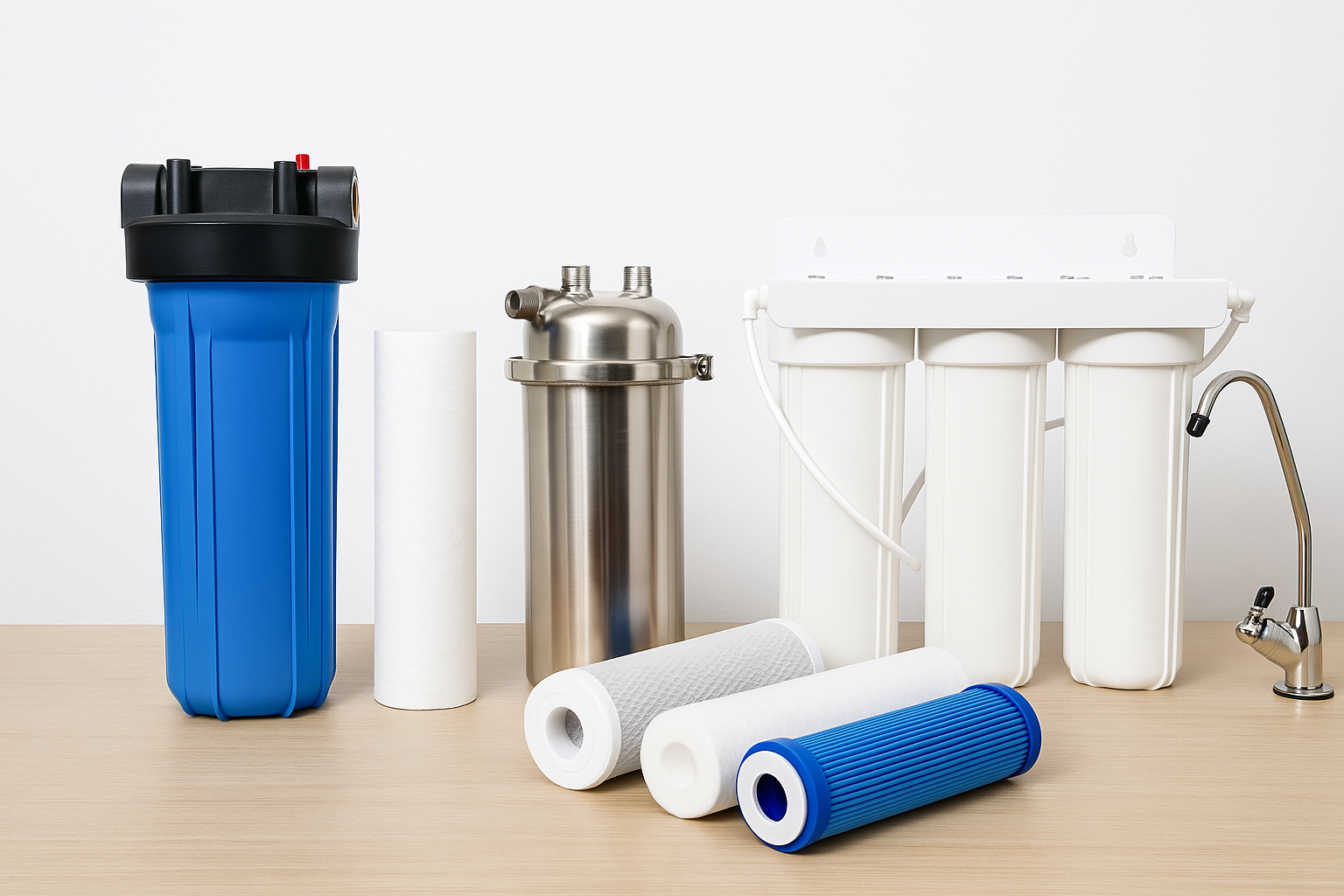
Sediment filters (spun polypropylene or pleated) are the first line of defense. They protect downstream equipment and are commonly installed as pre-filters for whole-house systems or reverse osmosis units. Choose micron ratings appropriate to your water—5–20 microns is typical for general sediment removal.
Iron and Manganese
Iron and manganese cause staining and metallic taste. Options include:
- Oxidizing filters (greensand or catalytic carbon) that convert dissolved iron to a filterable form.
- Ion exchange water softeners for low-to-moderate iron levels.
- Air injection/oxidation systems for higher levels or combined iron and sulfur issues.
Hydrogen Sulfide (Rotten Egg Smell)
Hydrogen sulfide can often be treated with aeration, catalytic carbon, or oxidizing filters depending on concentration. In severe cases, oxidation followed by filtration or an air-stripping system is effective.
Bacteria and Viruses
For microbial contamination, disinfection is critical. Consider:
- Ultraviolet (UV) sterilizers to inactivate bacteria and viruses—excellent as a point-of-entry solution.
- Chlorination systems for persistent bacterial issues; often paired with dechlorination afterward.
Nitrates and Nitrites
Nitrates are health concerns, especially for infants. Reverse osmosis and ion exchange are effective removal methods. RO is common for point-of-use (kitchen) systems, while ion exchange can be scaled for whole-house treatment in some scenarios.
Arsenic
Arsenic requires targeted media such as iron-based adsorption filters or reverse osmosis. Treatment choice depends on arsenic species (As(III) vs As(V)); oxidation may be required before filtration.
VOCs and Pesticides
Granular activated carbon (GAC) filters and catalytic carbon are effective for organic chemicals, VOCs, and many pesticides. For high concentrations consider carbon polishing after primary treatment, or point-of-use RO for guaranteed reduction.
Hardness (Calcium & Magnesium)
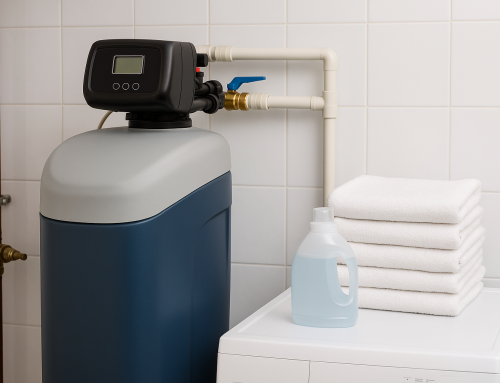
Water softeners using ion exchange are the standard solution for hardness. Newer template-assisted crystallization (TAC) systems reduce scale without sodium, useful for households avoiding salt-based softening.
Whole-House vs. Point-of-Use Solutions
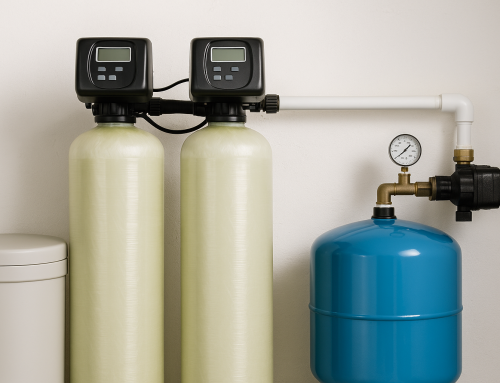
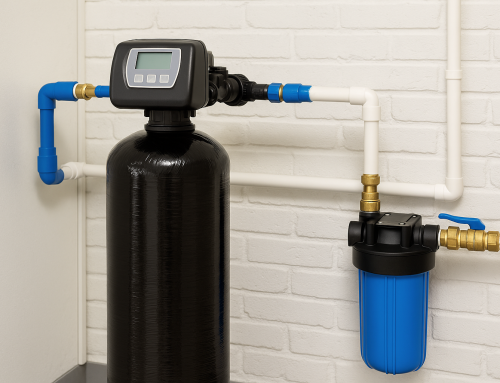
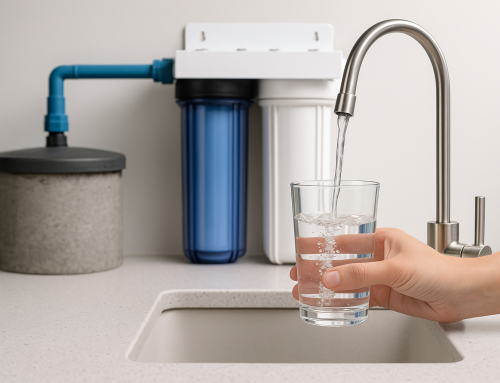
Whole-house (point-of-entry) systems treat all water entering your home—ideal for sediment, iron, sulfur, hardness, and microbial protection of plumbing and appliances. Point-of-use systems (like under-sink RO and dedicated carbon filters) deliver highly purified drinking and cooking water. Often the best approach combines both: a whole-house pre-treatment plus a point-of-use RO for drinking water.
Maintenance and Testing
Regular maintenance keeps systems performing: replace sediment and carbon filters as recommended, clean or replace softener resin and media when needed, and change UV lamps annually. Re-test well water at least annually or any time you notice taste, odor, or clarity changes. Testing is the only reliable way to know whether your system is working properly or needs adjustment.
How to Choose the Right System
Follow these steps to select the best filtration strategy:
- Get a comprehensive water test from a certified laboratory.
- Identify priority contaminants affecting health, plumbing, and appliances.
- Select technologies matched to those contaminants (see recommendations above).
- Decide between whole-house protection and point-of-use treatment—or both.
- Work with a certified installer to size equipment and plan maintenance.
If you’d like expert guidance, reach out to Custom Filtration Systems to schedule an appointment for professional testing and personalized recommendations.
Conclusion
Choosing the best filters for well water depends on accurate testing, understanding the contaminants present, and matching those contaminants to proven technologies—sediment filters, activated carbon, RO, ion exchange, UV, and specialized media. Regular maintenance and working with a trusted local provider will keep your water safe and your system efficient. Contact Custom Filtration Systems to book an appointment and start on a clear path to cleaner, safer well water.