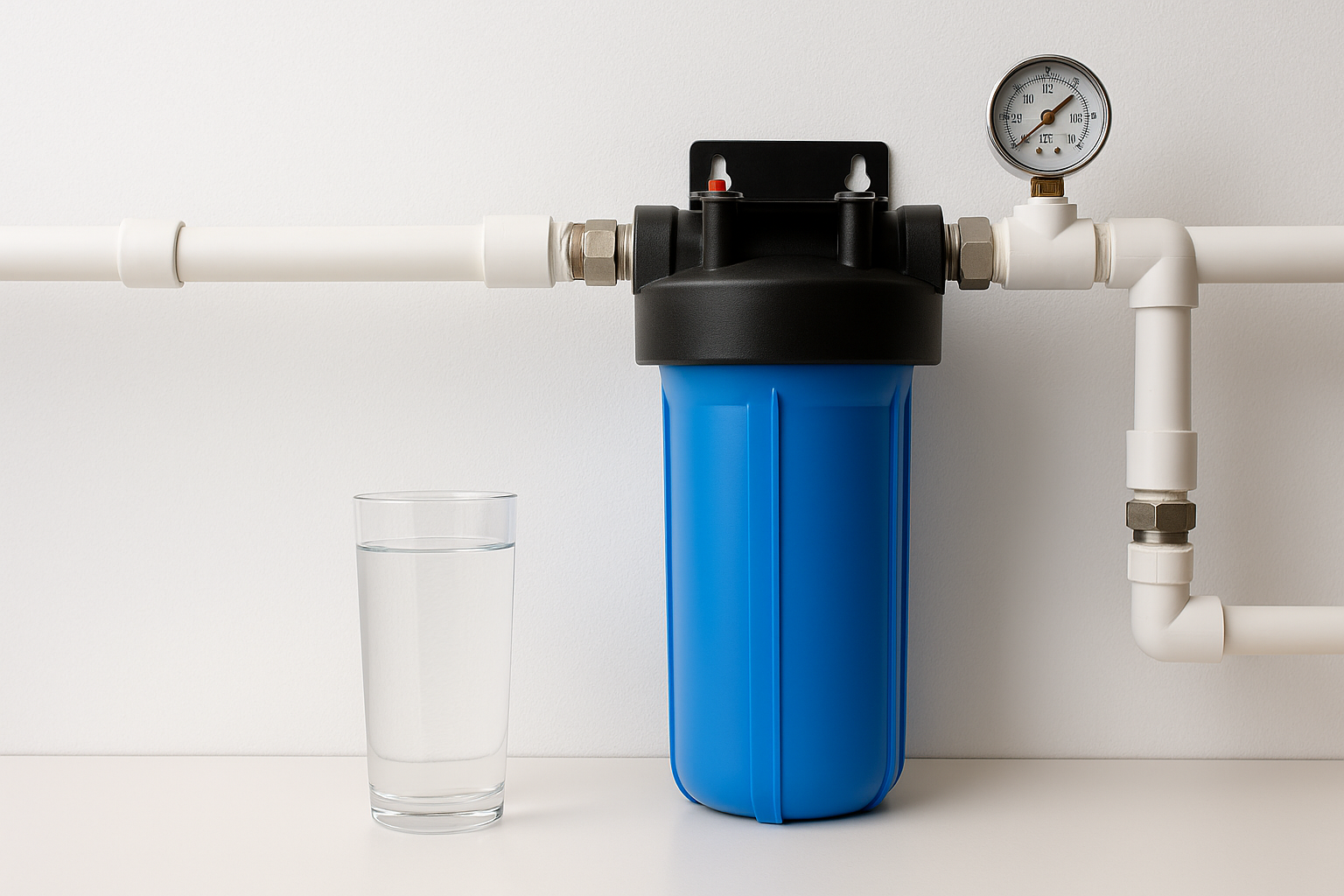
Why a Whole House Water Filter Matters
Clean water is more than a convenience — it affects your family’s health, your plumbing, and the lifespan of appliances. Whole house water filters treat water at the point it enters your home, reducing contaminants, sediment, chlorine taste and odor, and protecting fixtures and appliances. This guide reviews popular whole house systems, explains how we evaluated them, and helps you choose the right option for your needs.
How We Review Whole House Water Filters
Not all filters are created equal. Our review framework focuses on practical factors homeowners care about:
- Filtration performance: Which contaminants are reduced (sediment, chlorine, VOCs, heavy metals, bacteria)?
- Flow rate and capacity: Can it support multiple fixtures without pressure drop?
- Maintenance and cost: Filter life, replacement cost, and ease of servicing.
- Build and warranty: Materials, certifications, and customer support.
- Real-world feedback: Customer reviews and installer experience.
Top Whole House Water Filters — Quick Reviews
Below are widely recommended systems across different budgets and needs. Each entry summarizes strengths and trade-offs so you can match a system to your home.
Aquasana Whole House (Rhino) Series
Why homeowners like it: Good balance of performance and price. The multi-stage design typically reduces chlorine, sediment, and a wide range of contaminants, and options include salt-free conditioners.
Pros: Reliable chlorine and taste reduction, available pre-filter options, long-life filters.
Cons: Premium additives (e.g., UV or softeners) increase cost; some models require professional installation for best results.
Pelican / Pentair Whole House Systems
Why homeowners like it: Robust build quality and effective media for chlorine, sediment, and scale reduction. Pelican systems often pair carbon filtration with catalytic carbon or KDF media.
Pros: Strong contaminant reduction, good flow rates, reputable brand support.
Cons: Larger footprint and higher upfront cost; replacement media can be pricier.
iSpring Whole House Filters
Why homeowners like it: Flexible configurations and solid DIY-friendly designs. iSpring offers sediment + carbon combos and options to add UV or RO downstream.
Pros: Affordable, modular, easy-to-replace cartridges.
Cons: Some models use standard housings that require more frequent filter changes than high-capacity systems.
Kinetico Whole Home Systems
Why homeowners like it: Durable, non-electric designs and strong softening/filtration pairing. Kinetico systems target hard water and common contaminants with long-lasting performance.
Pros: High reliability, low maintenance, excellent softening capabilities.
Cons: Premium price and often sold through local dealers only.
Culligan Whole House Filters
Why homeowners like it: Turnkey service and professional installation. Culligan offers tailored solutions with strong service plans for replacement and maintenance.
Pros: Local service network, customizable systems, solid warranties.
Cons: Ongoing service contracts can add cost over time.
How to Choose the Right System for Your Home
Pick a system based on your water profile, household size, and priorities:
- Test your water first: Identify contaminants so you’re not buying more filtration than needed.
- Flow needs: For large households, prioritize systems with high GPM ratings and large cartridges.
- Maintenance: Consider how often you’re willing to change cartridges and the total yearly cost.
- Space and installation: Some systems need more room and professional plumbing work.
- Extra features: UV for biological contaminants, softening for hard water, or catalytic carbon for chloramines.
Common Questions and Real-World Tips
How often should filters be replaced? It depends on capacity and water quality — typical ranges are 6 months to 5 years for different stages. Watch for drops in water pressure or changes in taste and odor.
Is professional installation necessary? DIY is possible for many units, but hiring a qualified installer ensures correct bypass valves, pressure handling, and warranty compliance.
Can a whole house filter remove lead? Some systems with certified media can reduce lead, but you should verify certification and test water after installation.
Conclusion
Whole house water filters offer a meaningful upgrade in water quality, protection for plumbing and appliances, and peace of mind. The best choice depends on your water tests, household flow needs, and budget. For personalized recommendations and professional installation, reach out to Custom Filtration Systems to schedule an appointment. Their team can test your water, walk through options, and help you find the right system for long-term performance.