Introduction
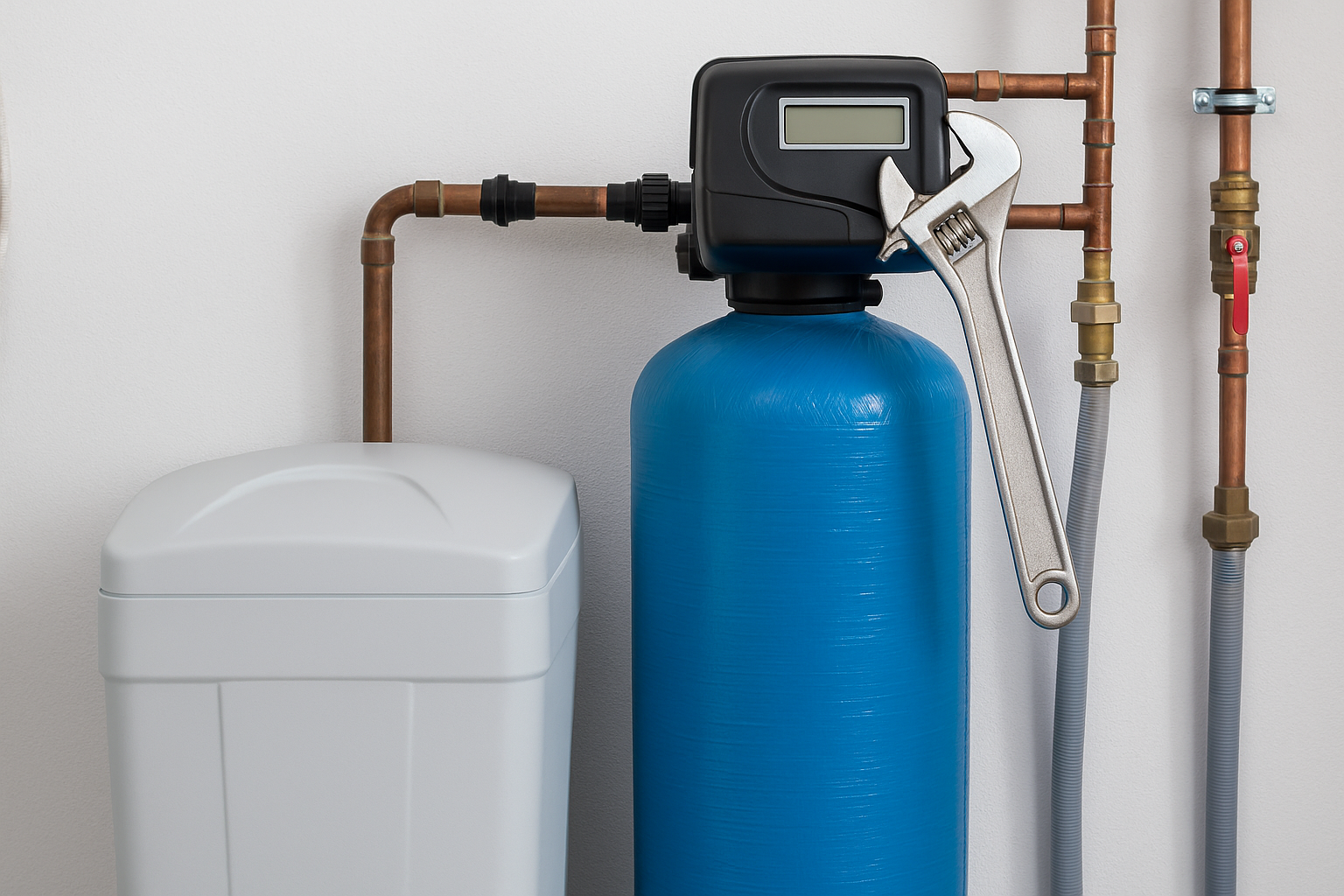
Water softeners keep hard water minerals from damaging plumbing, appliances, and clothing. When your system isn’t performing, it’s often fixable with a few diagnostic steps. This guide walks you through common water softener problems, practical troubleshooting steps, DIY fixes, and when to call a pro. If you’d prefer expert help, reach out to Custom Filtration Systems for an appointment.
Why Troubleshooting Matters
Ignoring softener issues leads to scale buildup, higher energy bills, and appliance wear. Early diagnosis saves money and extends equipment life. Troubleshooting also helps determine whether a simple adjustment or professional service is needed.
Common Water Softener Problems
1. Softener Is Not Softening Water
Symptoms: Soap scum returns, spots on dishes, or scale on fixtures. Possible causes include low salt, salt bridges, exhausted resin, or programming errors.
2. Low Water Flow or Pressure
Symptoms: Reduced flow at faucets or showers. Causes can be clogged resin, blocked valves, or buildup in pipes.
3. Salt Bridges and Salt Mushing
Symptoms: High salt level but no salt in the brine well; system fails to regenerate. Salt can form a hard crust (bridge) or a sludge (mushing) that prevents normal brine draw.
4. Regeneration Problems
Symptoms: Regeneration doesn’t start or stops early. Causes include timer issues, power interruptions, or faulty control valves.
5. Leaks or Strange Noises
Symptoms: Visible leaks, dripping, or unusual sounds. Often due to worn seals, loose fittings, or cracked tanks.
Step-by-Step Troubleshooting Guide
Step 1 — Check Settings and Power
Ensure the softener is plugged in, the circuit is on, and the timer/date settings are accurate. A mis-set regeneration schedule can make water seem untreated.
Step 2 — Inspect Salt Level and Quality
Open the brine tank and check salt level — it should be above the water line but not overflowing. Use clean, high-quality salt (pellets are preferred). Remove debris or contaminants.
Step 3 — Look for Salt Bridges
Gently tap the side of the brine tank or insert a broom handle to test for a solid layer. If a bridge exists, carefully break it up and remove loose chunks.
Step 4 — Verify Regeneration Cycle
Manually initiate a regeneration cycle (follow your owner’s manual). Observe whether the cycle runs through all stages. If not, note any error codes or abnormal behavior.
Step 5 — Test Water Hardness
Use test strips or a digital hardness test before and after the softener to confirm performance. This helps isolate whether the issue is the softener or plumbing downstream.
Step 6 — Inspect Valves and Bypass
Make sure bypass valves are fully in service position and not accidentally set to bypass (which would leave water untreated).
Step 7 — Check for Resin or Tank Issues
If resin is old or fouled, softening efficiency drops. Signs include persistent hardness after working through troubleshooting steps. Resin replacement typically requires a technician.
DIY Fixes You Can Try
- Reset and Power Cycle: Turn the unit off for a minute and restart to clear minor control glitches.
- Break Salt Bridges: Carefully break and remove crusted salt in the brine tank.
- Clean the Brine Tank: Empty, rinse, and sanitize the tank if you see sludge or debris. Refill with fresh salt.
- Check and Reprogram Settings: Correct hardness settings, regeneration frequency, and time-of-day settings.
- Replace Simple Parts: O-rings, seals, and hoses are often inexpensive and user-replaceable if you’re comfortable with basic plumbing.
When to Call a Professional
Some issues require professional diagnosis and repair. Contact Custom Filtration Systems for an appointment if you notice any of the following:
- Persistent hardness after basic troubleshooting
- Internal valve, control head, or timer failure
- Significant resin fouling or need for resin replacement
- Leaks from tanks or plumbing connections that you can’t safely repair
- Repeated electrical or control errors
Professional technicians have the tools and parts to safely diagnose and restore your system to peak performance.
Maintenance Tips to Prevent Future Problems
- Check salt level monthly and top off with quality salt.
- Clean the brine tank annually or as recommended by the manufacturer.
- Run a water hardness test once or twice a year to catch issues early.
- Schedule routine service with a qualified technician for inspection and preventive maintenance.
- Avoid using cottage-cheese or rock salt — pellets reduce mushing and bridging.
Conclusion
Troubleshooting a water softener often starts with simple checks—salt level, settings, and a manual regeneration. Many minor issues are resolvable at home, but persistent problems or complex repairs should be handled by professionals. For reliable diagnostic help and repairs, reach out to Custom Filtration Systems for an appointment and expert service to keep your water softener working efficiently.